Showing posts with label john mccain. Show all posts

Friday, March 06, 2009

The New Face of the GOP

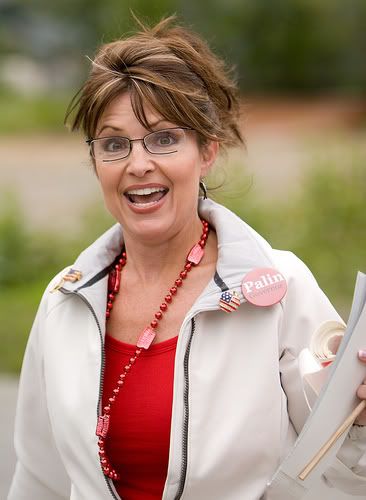
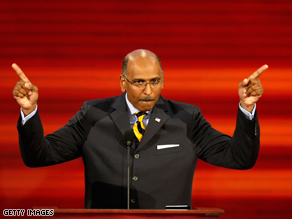
Photo courtesy of CNN.comWith the departure of George W. Bush and the dismantling of Sen. John McCain by President Barack Obama, the Republican Party has been rudderless and faceless since the election in November. The far right abandoned the less-than-stellar conservative credentials of McCain while holding their collective noses as they supported his running mate, Gov. Sarah Palin, a relative unknown from a part of the country not generally known for its political chops.

It took six rounds of voting and considerable arm-twisting before Michael Steele could wrest control of the Republican National Committee. Steele, the former Lt. Governor of Maryland, was propped up to lean on his African American roots to be the Anti-Obama for right-thinking Americans. But his rise to the chairmanship appears to be more like window dressing than an actual change in Republican thought about Blacks and minorities in general.

The governor of Louisiana - little Piyush "it's Bobby from the 'Brady Bunch'" Jindal - was poised to jumpstart his national political two-step on the back of President Obama's first speech before Congress. Unfortunately, Jindal's handlers neglected to remind his speechwriters of how much this tenderfoot is shrinking violet under the glare of the national spotlight. They sent him out to slay the "Dragon Obama" with a pea shooter! He is no longer a national figure... no longer in the running, either.

The void left by Bush, McCain, Palin, Steele, Jindal, and the rest of nameless Republican operatives has been filled by the blowhard ass of one Rush Limbaugh. He has a devoted national audience that has been tuning in daily for close to two decades to get their right wing marching orders. He spends the better part of his radio segment telling his viewers what to think and how outraged they should be at the latest Democratic shenanigans.

~ ~ ~

RNC Chairman Michael Steele thought that he would secure his position at the top of the party by taking on Limbaugh... he had nowhere enough piss to win that pissing contest. At the end of the week, he had to kowtow, eat crow, and apologize to Rush Limbaugh. I can almost hear Rush phoning Sean Hannity, "I made that boy lick my boots!"

To further diminish his "face of the party" credentials, a Black Republican has called for Steele to resign as party chairman. Instead of being "Darky II: The Right One, Baby" in 2012 at the top of the Republican ticket, in three short weeks, he already has the darky faithful in the Republican party putting Steele's balls in a vice.

Right wing nut job Dr. Ada Fisher, National Committee Chairwoman in North Carolina, has called on Steele to step down (from an article in The Hill):

Michael Steele should resign as Republican National Committee (RNC) chairman, according to a committee member from North Carolina.

In an e-mail to fellow RNC members obtained by The Hill, Dr. Ada Fisher, North Carolina's national committeewoman, said Steele is "eroding confidence" in the GOP and that members of his transition team should encourage him to step aside. Fisher added Steele's personal e-mail address to the e-mail.

"I don't want to hear anymore [sic] language trying to be cool about the bling in the stimulus package or appealing to D.L. Hughley and blacks in a way that isn't going to win us any votes and makes us frankly appear to many blacks as quite foolish," Fisher wrote.

Fisher, who is one of three black members of the national committee, backed South Carolina GOP Chairman Katon Dawson, whom Steele edged out in the final round of voting to win the chairmanship in late January. She has voiced repeated opposition to Steele, sending dozens of e-mails to committee members even after Steele won election slamming him for any number of chips that have fallen awry.

Fisher’s call for Steele’s resignation comes amid growing frustration in the GOP that the new chairman’s repeated gaffes are hurting the party.

It remains unclear just how much trouble Steele may be in with his own membership. While several RNC members have told The Hill that Steele remains popular with their bases, Washington-based strategists are grumbling, an attitude that is slowly filtering down to the states.

Steele appeared over the weekend on Hughley's CNN show, where he fought back against the assertion that radio host Rush Limbaugh was the "de facto leader" of the Republican Party. Steele said he himself was the de facto leader and called Limbaugh an entertainer whose program's content was "incendiary" and "ugly."

On Monday, Limbaugh shot back, saying on his show that Steele was not the leader of the party and that many conservatives would "hang up" when Steele's RNC came calling for contributions.

"Limbaugh has already promised that 'His Conservatives' won't be giving to the RNC. I would suggest to you that that is a real bet," Fisher wrote. "If we can't raise money and continue to allow the alienation of the few varifiable [sic] red states remaining, we are foolish."

Steele later said he had reached out to Limbaugh to clarify his remarks, insisting he meant no offense. But the incident elicited crowing from Democrats, who for weeks have pursued a strategy seemingly designed to elevate Limbaugh to the front of the GOP line. Democrats would enjoy contrasting themselves with Limbaugh's assertion that he wants to see President Obama's economic policies fail.

Calling the Limbaugh-Steele clash a "Republican Horror Show," Fisher expressed what some other GOP strategists have until now only said privately: "I have never seen such ineptness in our GOP leadership," Fisher wrote. "And I though we handled the 2008 elections very poorly."

Fisher could not be reached for comment Thursday morning, while the RNC did not immediately have comment on her letter.


~ ~ ~

plez sez: dang! ole girl ain't cutting the brother any slack! i hate it when Black folk bicker publicly for publicity... i understand that she isn't a big fan of brother-man, but methinks she could've done her attack more quietly.

now, brother steele should know by now that the republicans wanted a brown face to counter the brown face sitting in the Oval Office. i guess he started fooling himself into thinking that republicans would actually hand him the keys to cars to take it whereever he wanted to go... he's sitting in the driver's seat, like hoke sat in the driver's seat in "driving miss daisy." he ain't driving that car nowhere that miss daisy don't approve of!

the republican party is still populated by rednecks, southerners, delusional Black folk (like dr. fisher and steele and connerly), and outright racists who believe this country is "too much for the Blacks" already.

plezWorld wonders aloud: how did michael steele win the chairmanship again?!?

~ ~ ~

i agree with dr. fisher about one thing... this Black thinks that the republican party looks foolish!

~ ~ Citations ~ ~

Read the The Hill article about the call for Steele to resign.

Read the CNN.com article about Fisher's call for Steele to step down.

Read the Christian Science Monitor article about the Steele-Limbaugh feud.

Read the Christian Science Monitor article about how Limbaugh is the head of the Republican Party.

Read the CNN.com article about Rush Limbaugh and the GOP.

~ ~ ~ ~ ~ ~


Monday, November 03, 2008

Obama-McCain Electoral Showdown in One Day

The Sunday afternoon before the first Tuesday in November... in 2008.

Sen. Barack Obama is exhorting his supporters to get to the polls on Tuesday, "I don't win if you don't vote on Tuesday."

Sen. John McCain is exhorting his supporters to continue the "good fight," he's comeback many times before and this time will be no different (unless there's a repeat of 2000 when George W. Bush took him out in the Republican primaries).

~ ~ ~

According to just about every model that has been published, Barack Obama is nursing a substantial lead in the national polls and the key battleground states that he needs to win. FiveThirtyEight.com predicts about 332.9 electoral votes, based on their polling.

John McCain has only one option to be elected the 44th President of the United States, he must win ALL of the battleground states that were won by George W. Bush in 2004! Right now, he is trailing Obama in the following Bush 2004 states: Ohio, Virginia, North Carolina, Colorado, New Mexico, and Nevada... and Florida is a dead heat! He is slightly ahead in Indiana, Missouri, and Montana.

Early voting has Obama putting pressure on McCain to get out the vote in such crucial states as Georgia, North Carolina, Ohio, and Virginia. And remember, McCain must win ALL of the Bush 2004 states in which he is currently trailing! The only non-Bush 2004 states that are "in play" for McCain according to the pollsters are New Hampshire and Pennsylvania for a grand total of 25 electoral votes.

FiveThirtyEight.com Electoral Map as of 11/2/2008

11/02/2008 Update from fivethirtyeight.com
Polls conducted since our update last evening suggest some tightening toward John McCain, but he sits well behind both nationwide and in many key battleground states and remains a long-shot to win the election.

The good news for McCain? SurveyUSA has become the latest pollster to show the race tightening in Pennsylvania, now giving Barack Obama a 7-point lead after he'd been in the mid-double digits at various points in October. The Muhlenberg/Morning Call tracker has also continued to tighten, also settling on that 7-point number.

SurveyUSA also has Virginia tightening a bit to 4 points. And McCain gained incrementally in the Research 2000, Gallup, and Diageo/Hotline trackers, although this comes after a couple of days when Obama had been moving up. (Rasmussen held steady, whereas Obama ticked up in Zogby).

Overall, our model shows McCain closing Obama's gap in the national popular vote to about 5.4 points. His win percentage has increased to 6.3 percent, from 3.8 percent last night.

However, several cautions about reading too much into these numbers:

Firstly, I have the model programmed to be EXTREMELY aggressive this time of year. There have been relatively few 'fresh' polls conducted within the past 24-48 hours -- most of these state polls were in the field late last week. As we get more data in today and tonight, the model could very well decide that the race is not tightening at all. Moreover, polling conducted on a weekend -- particularly on a quasi- holiday weekend -- is generally unreliable.

Secondly, even with this tightening, McCain remains well short the 2/2/2 condition that we defined last week:
John McCain polling within 2 points in 2 or more non-partisan polls (sorry, Strategic Vision) in at least 2 out of the 3 following states: Colorado, Virginia, Pennsylvania.
Indeed, McCain has not come within 2 points of Obama in any polls in any of these states.

Finally, where McCain has made progress, it has come mostly from undecided voters rather than Obama's support -- this is particularly the case in Pennsylvania. Therefore, he may be running out of persuadables to persuade.


In a surprise move, it appears that normally red Montana has been moved to the "tossup" category by CNN.com.

CNN Electoral Map as of 11/2/2008

CNN.com writes of "tossup" Montana:
Call it the battle for Big Sky country.

George W. Bush won Montana by 20 points in his re-election victory four years ago. But it seems times have changed in the state.

CNN's new Electoral College map, updated Sunday morning, moves Montana from "leaning John McCain" to "tossup."

The move is partially based on the new CNN poll of polls in Montana, compiled Friday, which suggests that McCain has a 1-point lead over his Democratic rival, Barack Obama, 46 percent to 45 percent. Nine percent of voters are undecided.

"The fact that Montana is up for grabs has to be extremely unsettling for the McCain campaign," said CNN Senior Political Researcher Alan Silverleib.

"Montana's usually a reliably Republican state in presidential campaigns. It's been won by the Democrats only twice in the past half century. If you're a Republican and you're fighting for Montana in the last few days of the campaign, you're not in good shape."

Three electoral votes are at stake in Montana, a state Obama visited in late August. McCain, the Republican nominee, has not campaigned in Montana during the general election.

With Montana moving to "tossup," CNN estimates that if the election were held today, Obama would win states with 291 electoral votes -- more than enough to capture the White House.


~ ~ ~ ~ ~ ~


Read the FiveThirtyEight.com article about updated polling for 11/2/2008.

Read the CNN.com articles about Montana being in play and its final poll before the election.

Read the CNN.com article about the Republican Party of Pennsylvania's "unauthorized" last minute Rev. Wright ad attacking Obama.

Read the New York Times articles about winning what was lost in 2004 and Obama's angst about being up in the polls.

Read the Washington Post article about Obama's projected electoral lead.

~ ~ ~ ~ ~ ~


plez sez: this will easily be the most exciting election of my forty-something years! the battle is between a Black guy who could just as easily be a close friend or cousin and an elder statesman white guy who is older than ronald reagan when he won the presidency!

the dynamics of watching an American dream unfold before our eyes: a Black guy born of a Kenyan father and a mother from Kansas, born in a country before Black people could vote in some parts of the country. we've literally watched BARACK OBAMA become a statesman before our eyes, as we watched him enthrall the crowd during the 2004 Democratic National Convention to his numerous debates with Sen. Hillary Clinton to his address on race to his massive community organization effort to mobilize millions on his behalf to his staring down the elder statesman to his becoming a world figure to his being on the cusp of becoming the Leader of the Free World!

my heart races in anticipation. you have no idea the fall that i've set myself up for if OBAMA does not win on tuesday. it will be a calamitous crash of monumental proportion... one which will probably involve years of therapy for full recovery!

the polls are pointing to an OBAMA win. the stars are aligned. history is waiting for OBAMA to inscribe the next chapter of America... a new America. An America for ALL, regardless of race, class, or station.

~ ~ ~
plezWorld will be working on November 4th to ensure that everyone in my community who wants to vote, gets to vote.

i spoke to my mother a few days ago. she grew up in the segregated south (north carolina) in the 30's and 40's.

Black people weren't allowed to vote back then.

my mother and father didn't get a chance to vote until they moved our family to new york in the mid-1950's. i was born before the Civil Rights Act of 1965. i was born before it was illegal to deny Black people the right to vote. in my short life, i've seen BARACK OBAMA's story go from fantastic to realistic.

on friday, my mother and her sister took advantage of early voting in Virginia. they both voted for BARACK OBAMA!


Sunday, November 02, 2008

McCain-Palin 2008 in plezWorld (Humor)

McCain-Palin 2008


This yard sign may motivate me to replace the current Obama-McCain sign that is in my yard now.


It's a joke, ya'll!

Tuesday, October 28, 2008

Barack Obama's Closing Argument in Canton, Ohio

On Monday afternoon, in Canton, Ohio, Sen. Barack Obama laid out in broad strokes the reasons why Americans should elect him as the 44th President of the United States. He told the voters that that after twenty-one months and three debates, Senator McCain still has not been able to tell the American people a single major thing he’d do differently from George Bush when it comes to the economy. But this is going to be a close race and the campaign must remain vigilant to win on November 4th.

Obama said, "We cannot let up for one day, one minute, or one second in this last week. Not now. Don't think for a minute that power concedes. We have a lot of work to do. We have to work like our future depends on it in this last week, because it does depend on it this week."

"Sen. McCain says that we can't spend the next four years waiting for our luck to change, but you understand that the biggest gamble we can take is to embrace the same old Bush-McCain policies that have failed us for the last eight years," Obama said.

Portions of Barack Obama's Closing Argument Speech:


Full Text of Obama's "One Week" Closing Argument Speech:

“One Week”
Closing Argument Speech
Monday, October 27th, 2008
Canton, Ohio

One week.

After decades of broken politics in Washington, eight years of failed policies from George Bush, and twenty-one months of a campaign that has taken us from the rocky coast of Maine to the sunshine of California, we are one week away from change in America.

In one week, you can turn the page on policies that have put the greed and irresponsibility of Wall Street before the hard work and sacrifice of folks on Main Street.

In one week, you can choose policies that invest in our middle-class, create new jobs, and grow this economy from the bottom-up so that everyone has a chance to succeed; from the CEO to the secretary and the janitor; from the factory owner to the men and women who work on its floor.

In one week, you can put an end to the politics that would divide a nation just to win an election; that tries to pit region against region, city against town, Republican against Democrat; that asks us to fear at a time when we need hope.

In one week, at this defining moment in history, you can give this country the change we need.

We began this journey in the depths of winter nearly two years ago, on the steps of the Old State Capitol in Springfield, Illinois. Back then, we didn't have much money or many endorsements. We weren't given much of a chance by the polls or the pundits, and we knew how steep our climb would be.

But I also knew this. I knew that the size of our challenges had outgrown the smallness of our politics. I believed that Democrats and Republicans and Americans of every political stripe were hungry for new ideas, new leadership, and a new kind of politics – one that favors common sense over ideology; one that focuses on those values and ideals we hold in common as Americans.

Most of all, I believed in your ability to make change happen. I knew that the American people were a decent, generous people who are willing to work hard and sacrifice for future generations. And I was convinced that when we come together, our voices are more powerful than the most entrenched lobbyists, or the most vicious political attacks, or the full force of a status quo in Washington that wants to keep things just the way they are.

Twenty-one months later, my faith in the American people has been vindicated. That's how we've come so far and so close – because of you. That's how we'll change this country – with your help. And that's why we can't afford to slow down, sit back, or let up for one day, one minute, or one second in this last week. Not now. Not when so much is at stake.

We are in the middle of the worst economic crisis since the Great Depression. 760,000 workers have lost their jobs this year. Businesses and families can't get credit. Home values are falling. Pensions are disappearing. Wages are lower than they've been in a decade, at a time when the cost of health care and college have never been higher. It's getting harder and harder to make the mortgage, or fill up your gas tank, or even keep the electricity on at the end of the month.

At a moment like this, the last thing we can afford is four more years of the tired, old theory that says we should give more to billionaires and big corporations and hope that prosperity trickles down to everyone else. The last thing we can afford is four more years where no one in Washington is watching anyone on Wall Street because politicians and lobbyists killed common-sense regulations. Those are the theories that got us into this mess. They haven't worked, and it's time for change. That's why I'm running for President of the United States.

Now, Senator McCain has served this country honorably. And he can point to a few moments over the past eight years where he has broken from George Bush – on torture, for example. He deserves credit for that. But when it comes to the economy – when it comes to the central issue of this election – the plain truth is that John McCain has stood with this President every step of the way. Voting for the Bush tax cuts for the wealthy that he once opposed. Voting for the Bush budgets that spent us into debt. Calling for less regulation twenty-one times just this year. Those are the facts.

And now, after twenty-one months and three debates, Senator McCain still has not been able to tell the American people a single major thing he'd do differently from George Bush when it comes to the economy. Senator McCain says that we can't spend the next four years waiting for our luck to change, but you understand that the biggest gamble we can take is embracing the same old Bush-McCain policies that have failed us for the last eight years.

It's not change when John McCain wants to give a $700,000 tax cut to the average Fortune 500 CEO. It's not change when he wants to give $200 billion to the biggest corporations or $4 billion to the oil companies or $300 billion to the same Wall Street banks that got us into this mess. It's not change when he comes up with a tax plan that doesn't give a penny of relief to more than 100 million middle-class Americans. That's not change.

Look – we've tried it John McCain's way. We've tried it George Bush's way. Deep down, Senator McCain knows that, which is why his campaign said that “if we keep talking about the economy, we're going to lose.” That's why he's spending these last weeks calling me every name in the book. Because that's how you play the game in Washington. If you can't beat your opponent's ideas, you distort those ideas and maybe make some up. If you don't have a record to run on, then you paint your opponent as someone people should run away from. You make a big election about small things.

Ohio, we are here to say “Not this time. Not this year. Not when so much is at stake.” Senator McCain might be worried about losing an election, but I'm worried about Americans who are losing their homes, and their jobs, and their life savings. I can take one more week of John McCain's attacks, but this country can't take four more years of the same old politics and the same failed policies. It's time for something new.

The question in this election is not “Are you better off than you were four years ago?” We know the answer to that. The real question is, “Will this country be better off four years from now?”

I know these are difficult times for America. But I also know that we have faced difficult times before. The American story has never been about things coming easy – it's been about rising to the moment when the moment was hard. It's about seeing the highest mountaintop from the deepest of valleys. It's about rejecting fear and division for unity of purpose. That's how we've overcome war and depression. That's how we've won great struggles for civil rights and women's rights and worker's rights. And that's how we'll emerge from this crisis stronger and more prosperous than we were before – as one nation; as one people.

Remember, we still have the most talented, most productive workers of any country on Earth. We're still home to innovation and technology, colleges and universities that are the envy of the world. Some of the biggest ideas in history have come from our small businesses and our research facilities. So there's no reason we can't make this century another American century. We just need a new direction. We need a new politics.

Now, I don't believe that government can or should try to solve all our problems. I know you don't either. But I do believe that government should do that which we cannot do for ourselves – protect us from harm and provide a decent education for our children; invest in new roads and new science and technology. It should reward drive and innovation and growth in the free market, but it should also make sure businesses live up to their responsibility to create American jobs, and look out for American workers, and play by the rules of the road. It should ensure a shot at success not only for those with money and power and influence, but for every single American who's willing to work. That's how we create not just more millionaires, but more middle-class families. That's how we make sure businesses have customers that can afford their products and services. That's how we've always grown the American economy – from the bottom-up. John McCain calls this socialism. I call it opportunity, and there is nothing more American than that.

Understand, if we want get through this crisis, we need to get beyond the old ideological debates and divides between left and right. We don't need bigger government or smaller government. We need a better government – a more competent government – a government that upholds the values we hold in common as Americans.

We don't have to choose between allowing our financial system to collapse and spending billions of taxpayer dollars to bail out Wall Street banks. As President, I will ensure that the financial rescue plan helps stop foreclosures and protects your money instead of enriching CEOs. And I will put in place the common-sense regulations I've been calling for throughout this campaign so that Wall Street can never cause a crisis like this again. That's the change we need.

The choice in this election isn't between tax cuts and no tax cuts. It's about whether you believe we should only reward wealth, or whether we should also reward the work and workers who create it. I will give a tax break to 95% of Americans who work every day and get taxes taken out of their paychecks every week. I'll eliminate income taxes for seniors making under $50,000 and give homeowners and working parents more of a break. And I'll help pay for this by asking the folks who are making more than $250,000 a year to go back to the tax rate they were paying in the 1990s. No matter what Senator McCain may claim, here are the facts – if you make under $250,000, you will not see your taxes increase by a single dime – not your income taxes, not your payroll taxes, not your capital gains taxes. Nothing. Because the last thing we should do in this economy is raise taxes on the middle-class.

When it comes to jobs, the choice in this election is not between putting up a wall around America or allowing every job to disappear overseas. The truth is, we won't be able to bring back every job that we've lost, but that doesn't mean we should follow John McCain's plan to keep giving tax breaks to corporations that send American jobs overseas. I will end those breaks as President, and I will give American businesses a $3,000 tax credit for every job they create right here in the United States of America. I'll eliminate capital gains taxes for small businesses and start-up companies that are the engine of job creation in this country. We'll create two million new jobs by rebuilding our crumbling roads, and bridges, and schools, and by laying broadband lines to reach every corner of the country. And I will invest $15 billion a year in renewable sources of energy to create five million new energy jobs over the next decade – jobs that pay well and can't be outsourced; jobs building solar panels and wind turbines and a new electricity grid; jobs building the fuel-efficient cars of tomorrow, not in Japan or South Korea but here in the United States of America; jobs that will help us eliminate the oil we import from the Middle East in ten years and help save the planet in the bargain. That's how America can lead again.

When it comes to health care, we don't have to choose between a government-run health care system and the unaffordable one we have now. If you already have health insurance, the only thing that will change under my plan is that we will lower premiums. If you don't have health insurance, you'll be able to get the same kind of health insurance that Members of Congress get for themselves. We'll invest in preventative care and new technology to finally lower the cost of health care for families, businesses, and the entire economy. And as someone who watched his own mother spend the final months of her life arguing with insurance companies because they claimed her cancer was a pre-existing condition and didn't want to pay for treatment, I will stop insurance companies from discriminating against those who are sick and need care most.

When it comes to giving every child a world-class education so they can compete in this global economy for the jobs of the 21st century, the choice is not between more money and more reform – because our schools need both. As President, I will invest in early childhood education, recruit an army of new teachers, pay them more, and give them more support. But I will also demand higher standards and more accountability from our teachers and our schools. And I will make a deal with every American who has the drive and the will but not the money to go to college: if you commit to serving your community or your country, we will make sure you can afford your tuition. You invest in America, America will invest in you, and together, we will move this country forward.

And when it comes to keeping this country safe, we don't have to choose between retreating from the world and fighting a war without end in Iraq. It's time to stop spending $10 billion a month in Iraq while the Iraqi government sits on a huge surplus. As President, I will end this war by asking the Iraqi government to step up, and finally finish the fight against bin Laden and the al Qaeda terrorists who attacked us on 9/11. I will never hesitate to defend this nation, but I will only send our troops into harm's way with a clear mission and a sacred commitment to give them the equipment they need in battle and the care and benefits they deserve when they come home. I will build new partnerships to defeat the threats of the 21st century, and I will restore our moral standing, so that America is once again that last, best hope for all who are called to the cause of freedom, who long for lives of peace, and who yearn for a better future.

I won't stand here and pretend that any of this will be easy – especially now. The cost of this economic crisis, and the cost of the war in Iraq, means that Washington will have to tighten its belt and put off spending on things we can afford to do without. On this, there is no other choice. As President, I will go through the federal budget, line-by-line, ending programs that we don't need and making the ones we do need work better and cost less.

But as I've said from the day we began this journey all those months ago, the change we need isn't just about new programs and policies. It's about a new politics – a politics that calls on our better angels instead of encouraging our worst instincts; one that reminds us of the obligations we have to ourselves and one another.

Part of the reason this economic crisis occurred is because we have been living through an era of profound irresponsibility. On Wall Street, easy money and an ethic of “what's good for me is good enough” blinded greedy executives to the danger in the decisions they were making. On Main Street, lenders tricked people into buying homes they couldn't afford. Some folks knew they couldn't afford those houses and bought them anyway. In Washington, politicians spent money they didn't have and allowed lobbyists to set the agenda. They scored political points instead of solving our problems, and even after the greatest attack on American soil since Pearl Harbor, all we were asked to do by our President was to go out and shop.

That is why what we have lost in these last eight years cannot be measured by lost wages or bigger trade deficits alone. What has also been lost is the idea that in this American story, each of us has a role to play. Each of us has a responsibility to work hard and look after ourselves and our families, and each of us has a responsibility to our fellow citizens. That's what's been lost these last eight years – our sense of common purpose; of higher purpose. And that's what we need to restore right now.

Yes, government must lead the way on energy independence, but each of us must do our part to make our homes and our businesses more efficient. Yes, we must provide more ladders to success for young men who fall into lives of crime and despair. But all of us must do our part as parents to turn off the television and read to our children and take responsibility for providing the love and guidance they need. Yes, we can argue and debate our positions passionately, but at this defining moment, all of us must summon the strength and grace to bridge our differences and unite in common effort – black, white, Latino, Asian, Native American; Democrat and Republican, young and old, rich and poor, gay and straight, disabled or not.

In this election, we cannot afford the same political games and tactics that are being used to pit us against one another and make us afraid of one another. The stakes are too high to divide us by class and region and background; by who we are or what we believe.

Because despite what our opponents may claim, there are no real or fake parts of this country. There is no city or town that is more pro-America than anywhere else – we are one nation, all of us proud, all of us patriots. There are patriots who supported this war in Iraq and patriots who opposed it; patriots who believe in Democratic policies and those who believe in Republican policies. The men and women who serve in our battlefields may be Democrats and Republicans and Independents, but they have fought together and bled together and some died together under the same proud flag. They have not served a Red America or a Blue America – they have served the United States of America.

It won't be easy, Ohio. It won't be quick. But you and I know that it is time to come together and change this country. Some of you may be cynical and fed up with politics. A lot of you may be disappointed and even angry with your leaders. You have every right to be. But despite all of this, I ask of you what has been asked of Americans throughout our history.

I ask you to believe – not just in my ability to bring about change, but in yours.

I know this change is possible. Because I have seen it over the last twenty-one months. Because in this campaign, I have had the privilege to witness what is best in America.

I've seen it in lines of voters that stretched around schools and churches; in the young people who cast their ballot for the first time, and those not so young folks who got involved again after a very long time. I've seen it in the workers who would rather cut back their hours than see their friends lose their jobs; in the neighbors who take a stranger in when the floodwaters rise; in the soldiers who re-enlist after losing a limb. I've seen it in the faces of the men and women I've met at countless rallies and town halls across the country, men and women who speak of their struggles but also of their hopes and dreams.

I still remember the email that a woman named Robyn sent me after I met her in Ft. Lauderdale. Sometime after our event, her son nearly went into cardiac arrest, and was diagnosed with a heart condition that could only be treated with a procedure that cost tens of thousands of dollars. Her insurance company refused to pay, and their family just didn't have that kind of money.

In her email, Robyn wrote, “I ask only this of you – on the days where you feel so tired you can't think of uttering another word to the people, think of us. When those who oppose you have you down, reach deep and fight back harder.”

Ohio, that's what hope is – that thing inside us that insists, despite all evidence to the contrary, that something better is waiting around the bend; that insists there are better days ahead. If we're willing to work for it. If we're willing to shed our fears and our doubts. If we're willing to reach deep down inside ourselves when we're tired and come back fighting harder.

Hope! That's what kept some of our parents and grandparents going when times were tough. What led them to say, “Maybe I can't go to college, but if I save a little bit each week my child can; maybe I can't have my own business but if I work really hard my child can open one of her own.” It's what led immigrants from distant lands to come to these shores against great odds and carve a new life for their families in America; what led those who couldn't vote to march and organize and stand for freedom; that led them to cry out, “It may look dark tonight, but if I hold on to hope, tomorrow will be brighter.”

That's what this election is about. That is the choice we face right now.

Don't believe for a second this election is over. Don't think for a minute that power concedes. We have to work like our future depends on it in this last week, because it does.

In one week, we can choose an economy that rewards work and creates new jobs and fuels prosperity from the bottom-up.

In one week, we can choose to invest in health care for our families, and education for our kids, and renewable energy for our future.

In one week, we can choose hope over fear, unity over division, the promise of change over the power of the status quo.

In one week, we can come together as one nation, and one people, and once more choose our better history.

That's what's at stake. That's what we're fighting for. And if in this last week, you will knock on some doors for me, and make some calls for me, and talk to your neighbors, and convince your friends; if you will stand with me, and fight with me, and give me your vote, then I promise you this – we will not just win Ohio, we will not just win this election, but together, we will change this country and we will change the world. Thank you, God bless you, and may God bless America.

###


Read the CNN.com article about the last week of Barack Obama's campaign for president here and here.


plez sez: BARACK OBAMA made his case for president while continuing to link john mccain to george bush.

we are one week away from changing AMERICA and plezWorld!


Sunday, October 26, 2008

Sarah Palin, Rogue Veep Candidate

There's 9 or 10 days until Election Day... the days are getting longer, the nights shorter, nerves are frayed, and the inevitable tension between Sen. John McCain (R-AZ) and Gov. Sarah Palin (R-AK) are becoming more and more evident on the campaign trail. Key aides and advisors for both campaigns have begun to confide in the media covering the candidates as to the growing rift between them.

In an MSNBC interview with Chris Matthews (on MSNBC's "Hardball"), Chuck Todd revealed that he felt a tension between McCain and Palin when they sat down for an interview with NBC News' Brian Williams. Todd stated, "I couldn't see chemistry between John McCain and Sarah Palin. I felt as if we grabbed two people and said 'here, sit next to each other, we are going to conduct an interview.' They are not comfortable with each other..."

A CNN.com article reports that several McCain advisers are frustrated with "Palin going rogue." A Palin aide is reported as saying, "[Palin] is simply trying to 'bust free' [from] what she believes was a damaging and mismanaged [introduction to the public]."

McCain sources say that Palin has repeated gone off message, and are beginning to wonder if the incidents are deliberate.
  • She has labeled the robocalls that the McCain has deployed as "irritating," even though she recorded a number of them.

  • She told reporters that she disagreed with the Mccain campaign's decision to pull out of Michigan a few weeks, stating that she and her husband would gladly campaign there.

  • One McCain advisor has that she appears to be looking out for herself... looking ahead to running for President in 2012 rather than Vice President in 2008!


A McCain advisor stated, "She is a diva. She takes no advice from anyone. ...also, she is playing for her own future and sees herself as the next leader of the party. Remember: Divas trust only unto themselves, as they see themselves as the beginning and end of all wisdom."

A Palin aide has acknowledged that she is trying to take more control of her message, pointing to last week's impromptu news conference on a Colorado Springs tarmac. Tracey Schmitt, Palin's press secretary, was urgently called over after Palin wandered over to the press and started talking. Schmitt tried in vain to end the unscheduled session.

Politico.com released an article that underlines the growing tension between the two candidates. Palin's aides put the blame squarely on Steve Schmidt, McCain's chief strategist, and Nicole Wallace, a former Bush aide who took a lead role in Palin's campaign. Palin's people blame mainly Wallace for having Palin avoid the media for days and then securing the that high-stakes disaster with CBS News' Katie Couric. It appears that Wallace did not have Palin's best interest at heart seeing that he left CBS to join the McCain campaign!

But a number of McCain aides defend the Wallace decision saying that Palin was "simply unready - 'green,' sloppy, and incomprehensibly willing to criticize McCain."

And after the ABC News fiasco with Charlie Gibson, the follow-up fiasco with CBS News' Katie Couric, and then the weekly lampoon and caricature of Palin by Tina Fey on NBC's "Saturday Night Live," it appears that Palin has decided that the only one who is gonna watch out for Sarah is Sarah!

The Politico.com article cites when Palin went "rogue":
When a McCain aide, speaking anonymously Friday to The Atlantic's Marc Ambinder, suggested that Palin's charge that [Sen. Barack] Obama was "palling around with terrorists" had "escaped HQ's vetting," it was Scheunemann who fired off an angry response that the speech was "fully vetted" and that to attack Palin for it was "bullshit."

Palin's "instincts," on display in recent days, have had her opening up to the media, including a round of interviews on talk radio, cable and broadcast outlets, as well as chats with her traveling press and local reporters.

Reporters really began to notice the change last Sunday, when Palin strolled over to a local television crew in Colorado Springs.

"Get Tracey," a staffer called out, according to The New York Times, summoning spokeswoman Tracey Schmitt, who reportedly "tried several times to cut it off with a terse 'Thank you!' in between questions, to no avail." The moment may have caused ulcers in some precincts of the McCain campaign, but it was an account Palin's admirers in Washington cheered.

Palin had also sought to give meatier policy speeches, in particular on energy policy and on policy for children with disabilities; she finally gave the latter speech Friday, but had wanted to deliver it much earlier.

She's also begun to make her own ad hoc calls about the campaign's direction and the ticket's policy. McCain, for instance, has remained silent on Democrats' calls for a stimulus package of new spending, a move many conservatives oppose but that could be broadly popular. But in an interview with the conservative radio host Glenn Beck earlier this week, Palin went "off the reservation" to make the campaign policy, one aide said.

"I say, you know, when is enough enough of taxpayer dollars being thrown into this bill out there?" she asked. "This next one of the Democrats being proposed should be very, very concerning to all Americans because to me it sends a message that $700 billion bailout, maybe that was just the tip of the iceberg. No, you know, we were told when we've got to be believing if we have enough elected officials who are going to be standing strong on fiscal conservative principles and free enterprise and we have to believe that there are enough of those elected officials to say, 'No, OK, that's enough.'"

~ ~ ~
But few imagine that Palin will be able to repair her image — and bad poll numbers — in the eleven days before the campaign ends. And the final straw for Palin and her allies was the news that the campaign had reported spending $150,000 on her clothes, turning her, again, into the butt of late-night humor.

"She never even set foot in these stores," the senior Republican said, noting Palin hadn't realized the cost when the clothes were brought to her in her Minnesota hotel room.

"It's completely out-of-control operatives," said the close ally outside the campaign. "She has no responsibility for that. It's incredibly frustrating for us and for her."

Between Palin's internal detractors and her allies, there's a middle ground: Some aides say that she's a flawed candidate whose handling exaggerated her weak spots.

"She was completely mishandled in the beginning. No one took the time to look at what her personal strengths and weaknesses are and developed a plan that made sense based on who she is as a candidate," the aide said. "Any concerns she or those close to her have about that are totally valid."

But the aide said that Palin's inexperience led her to her own mistakes:

"How she was handled allowed her weaknesses to hang out in full display."


~ ~ ~ ~ ~ ~

Read the Politico.com article about Rogue Sarah.

Read the CNN.com article about Sarah Palin's rogue streak.

Read the New York Times article about how Sarah Palin likes a good fight.

Read the New York Times article about Sarah Palin's high-priced makeup artist.

plez sez: go on with yo' bad self, sarah palin! something tells plezWorld that we haven't seen the last of "artic blast" palin!

mccain exercised poor judgement in being swayed by whatever forces swayed him into picking palin. he will go to his grave blaming her clueless ass for his loss! but it is his fault... his legacy will be being a bitter two-time loser (first to George W. Bush in 2000 and then to Barack Obama in 2008 - that skinny Black guy with the funny name and a Teflon coating) and she'll be back on the republican's radar in 2 years!

she'll probably re-invent herself for a 2012 run at the white house. considering the considerable vacuum in the party that bush (and mccain) have created, the party faithful will be looking for a conservative ideologue to "right the ship" and steer the party on a path to victory over Obama and the democrats during the 2012 election cycle. actually, she may have to hit the campaign trail to stay relevant during the 2010 midterm elections.

i'm assuming that Obama is going to win the white house. if he is unable to appear in charge of the economic recovery over the next 12 months OR if he has trouble taking care of all of the trouble in the middle east (iraq, afghanistan, and iran) over the next 24 months, then there will be a clear path for the conservatives to regain power in washington, dc.


Thursday, October 23, 2008

New York Times: Barack Obama for President

After endorsing New York Senator Hillary Clinton as the Democratic nominee and John McCain as the Republican nominee back during the primary season, the New York Times has now endorsed Sen. Barack Obama for President.

A recurring theme was McCain's judgement in the selection of Gov. Sarah Palin as his running mate. The endorsement speaks of Palin as being "so evidently unfit for the office" as one of the many reasons why they are backing Obama for President.

The entire New York Times endorsement of Barack Obama:

Barack Obama for President


Published: October 23, 2008

Hyperbole is the currency of presidential campaigns, but this year the nation’s future truly hangs in the balance.

The United States is battered and drifting after eight years of President Bush’s failed leadership. He is saddling his successor with two wars, a scarred global image and a government systematically stripped of its ability to protect and help its citizens — whether they are fleeing a hurricane’s floodwaters, searching for affordable health care or struggling to hold on to their homes, jobs, savings and pensions in the midst of a financial crisis that was foretold and preventable.

As tough as the times are, the selection of a new president is easy. After nearly two years of a grueling and ugly campaign, Senator Barack Obama of Illinois has proved that he is the right choice to be the 44th president of the United States.

Mr. Obama has met challenge after challenge, growing as a leader and putting real flesh on his early promises of hope and change. He has shown a cool head and sound judgment. We believe he has the will and the ability to forge the broad political consensus that is essential to finding solutions to this nation’s problems.

In the same time, Senator John McCain of Arizona has retreated farther and farther to the fringe of American politics, running a campaign on partisan division, class warfare and even hints of racism. His policies and worldview are mired in the past. His choice of a running mate so evidently unfit for the office was a final act of opportunism and bad judgment that eclipsed the accomplishments of 26 years in Congress.

Given the particularly ugly nature of Mr. McCain’s campaign, the urge to choose on the basis of raw emotion is strong. But there is a greater value in looking closely at the facts of life in America today and at the prescriptions the candidates offer. The differences are profound.

Mr. McCain offers more of the Republican every-man-for-himself ideology, now lying in shards on Wall Street and in Americans’ bank accounts. Mr. Obama has another vision of government’s role and responsibilities.

In his convention speech in Denver, Mr. Obama said, “Government cannot solve all our problems, but what it should do is that which we cannot do for ourselves: protect us from harm and provide every child a decent education; keep our water clean and our toys safe; invest in new schools and new roads and new science and technology.”

Since the financial crisis, he has correctly identified the abject failure of government regulation that has brought the markets to the brink of collapse.


The Economy

The American financial system is the victim of decades of Republican deregulatory and anti-tax policies. Those ideas have been proved wrong at an unfathomable price, but Mr. McCain — a self-proclaimed “foot soldier in the Reagan revolution” — is still a believer.

Mr. Obama sees that far-reaching reforms will be needed to protect Americans and American business.

Mr. McCain talks about reform a lot, but his vision is pinched. His answer to any economic question is to eliminate pork-barrel spending — about $18 billion in a $3 trillion budget — cut taxes and wait for unfettered markets to solve the problem.

Mr. Obama is clear that the nation’s tax structure must be changed to make it fairer. That means the well-off Americans who have benefited disproportionately from Mr. Bush’s tax cuts will have to pay some more. Working Americans, who have seen their standard of living fall and their children’s options narrow, will benefit. Mr. Obama wants to raise the minimum wage and tie it to inflation, restore a climate in which workers are able to organize unions if they wish and expand educational opportunities.

Mr. McCain, who once opposed President Bush’s tax cuts for the wealthy as fiscally irresponsible, now wants to make them permanent. And while he talks about keeping taxes low for everyone, his proposed cuts would overwhelmingly benefit the top 1 percent of Americans while digging the country into a deeper fiscal hole.


National Security

The American military — its people and equipment — is dangerously overstretched. Mr. Bush has neglected the necessary war in Afghanistan, which now threatens to spiral into defeat. The unnecessary and staggeringly costly war in Iraq must be ended as quickly and responsibly as possible.

While Iraq’s leaders insist on a swift drawdown of American troops and a deadline for the end of the occupation, Mr. McCain is still taking about some ill-defined “victory.” As a result, he has offered no real plan for extracting American troops and limiting any further damage to Iraq and its neighbors.

Mr. Obama was an early and thoughtful opponent of the war in Iraq, and he has presented a military and diplomatic plan for withdrawing American forces. Mr. Obama also has correctly warned that until the Pentagon starts pulling troops out of Iraq, there will not be enough troops to defeat the Taliban and Al Qaeda in Afghanistan.

Mr. McCain, like Mr. Bush, has only belatedly focused on Afghanistan’s dangerous unraveling and the threat that neighboring Pakistan may quickly follow.

Mr. Obama would have a learning curve on foreign affairs, but he has already showed sounder judgment than his opponent on these critical issues. His choice of Senator Joseph Biden — who has deep foreign-policy expertise — as his running mate is another sign of that sound judgment. Mr. McCain’s long interest in foreign policy and the many dangers this country now faces make his choice of Gov. Sarah Palin of Alaska more irresponsible.

Both presidential candidates talk about strengthening alliances in Europe and Asia, including NATO, and strongly support Israel. Both candidates talk about repairing America’s image in the world. But it seems clear to us that Mr. Obama is far more likely to do that — and not just because the first black president would present a new American face to the world.

Mr. Obama wants to reform the United Nations, while Mr. McCain wants to create a new entity, the League of Democracies — a move that would incite even fiercer anti-American furies around the world.

Unfortunately, Mr. McCain, like Mr. Bush, sees the world as divided into friends (like Georgia) and adversaries (like Russia). He proposed kicking Russia out of the Group of 8 industrialized nations even before the invasion of Georgia. We have no sympathy for Moscow’s bullying, but we also have no desire to replay the cold war. The United States must find a way to constrain the Russians’ worst impulses, while preserving the ability to work with them on arms control and other vital initiatives.

Both candidates talk tough on terrorism, and neither has ruled out military action to end Iran’s nuclear weapons program. But Mr. Obama has called for a serious effort to try to wean Tehran from its nuclear ambitions with more credible diplomatic overtures and tougher sanctions. Mr. McCain’s willingness to joke about bombing Iran was frightening.


The Constitution and the Rule of Law

Under Mr. Bush and Vice President Dick Cheney, the Constitution, the Bill of Rights, the justice system and the separation of powers have come under relentless attack. Mr. Bush chose to exploit the tragedy of Sept. 11, 2001, the moment in which he looked like the president of a unified nation, to try to place himself above the law.

Mr. Bush has arrogated the power to imprison men without charges and browbeat Congress into granting an unfettered authority to spy on Americans. He has created untold numbers of “black” programs, including secret prisons and outsourced torture. The president has issued hundreds, if not thousands, of secret orders. We fear it will take years of forensic research to discover how many basic rights have been violated.

Both candidates have renounced torture and are committed to closing the prison camp in Guantánamo Bay, Cuba.

But Mr. Obama has gone beyond that, promising to identify and correct Mr. Bush’s attacks on the democratic system. Mr. McCain has been silent on the subject.

Mr. McCain improved protections for detainees. But then he helped the White House push through the appalling Military Commissions Act of 2006, which denied detainees the right to a hearing in a real court and put Washington in conflict with the Geneva Conventions, greatly increasing the risk to American troops.

The next president will have the chance to appoint one or more justices to a Supreme Court that is on the brink of being dominated by a radical right wing. Mr. Obama may appoint less liberal judges than some of his followers might like, but Mr. McCain is certain to pick rigid ideologues. He has said he would never appoint a judge who believes in women’s reproductive rights.


The Candidates

It will be an enormous challenge just to get the nation back to where it was before Mr. Bush, to begin to mend its image in the world and to restore its self-confidence and its self-respect. Doing all of that, and leading America forward, will require strength of will, character and intellect, sober judgment and a cool, steady hand.

Mr. Obama has those qualities in abundance. Watching him being tested in the campaign has long since erased the reservations that led us to endorse Senator Hillary Rodham Clinton in the Democratic primaries. He has drawn in legions of new voters with powerful messages of hope and possibility and calls for shared sacrifice and social responsibility.

Mr. McCain, whom we chose as the best Republican nominee in the primaries, has spent the last coins of his reputation for principle and sound judgment to placate the limitless demands and narrow vision of the far-right wing. His righteous fury at being driven out of the 2000 primaries on a racist tide aimed at his adopted daughter has been replaced by a zealous embrace of those same win-at-all-costs tactics and tacticians.

He surrendered his standing as an independent thinker in his rush to embrace Mr. Bush’s misbegotten tax policies and to abandon his leadership position on climate change and immigration reform.

Mr. McCain could have seized the high ground on energy and the environment. Earlier in his career, he offered the first plausible bill to control America’s emissions of greenhouse gases. Now his positions are a caricature of that record: think Ms. Palin leading chants of “drill, baby, drill.”

Mr. Obama has endorsed some offshore drilling, but as part of a comprehensive strategy including big investments in new, clean technologies.

~ ~ ~ ~ ~ ~


Mr. Obama has withstood some of the toughest campaign attacks ever mounted against a candidate. He’s been called un-American and accused of hiding a secret Islamic faith. The Republicans have linked him to domestic terrorists and questioned his wife’s love of her country. Ms. Palin has also questioned millions of Americans’ patriotism, calling Republican-leaning states “pro-America.”

This politics of fear, division and character assassination helped Mr. Bush drive Mr. McCain from the 2000 Republican primaries and defeat Senator John Kerry in 2004. It has been the dominant theme of his failed presidency.

The nation’s problems are simply too grave to be reduced to slashing “robo-calls” and negative ads. This country needs sensible leadership, compassionate leadership, honest leadership and strong leadership. Barack Obama has shown that he has all of those qualities.


Read the New York Times article about Barack Obama for President here.

plez sez: once again, i take these endorsements with a grain of salt... they do not hold sway with me and my decision as to who i will cast my vote for.

but they are important inasmuch that they speak to how the endorsed candidate is perceived in the various communities when held up against his/her opponent. my perception of BARACK OBAMA pretty closely mirrors that of the New York Times editorial staff.


RNC to Palin: "Let Me Upgrade Your Wardrobe"

Look at this picture of Gov. Sarah Palin (in her Alaska governor days); she's loping around Juneau with her hair looking all crazy in that dog-tired brown warmup jacket and a pair of moose-skin boots. Fast forward to her appearances as Sen. John McCain's number two; see the flashy high-end shoes, upgraded and stylish outfits, expensive looking leather jacket. Hmmmm... something happened between then and now... something big... something with a bunch of zeros after it!

It has been reported by Politico.com that the Republican National Committee (RNC) has spent more than $150,000 on fashionable clothes for Sarah Palin since she was named McCain's running mate. Yeah, all those Joe Six-Packs and hockey moms and Joe the Plumbers out there who make a fraction of that in one year, the ones who've been watching their 401(k)'s disappear like water swirling in the bowl after a successful visit by Joe the Plumber have been hootin' and hollerin' for a woman who has spent double or triple their income in clothes over the past seven weeks.

And mind you, she hasn't been shopping in Sears, or Steinmart, or Wal-Mart, or JC Penney, or Belk like the everyday people she claims to represent. No, Ms. Palin has been ringing the registers in places like Saks Fifth Avenue in Manhattan (to the tune of $49,425) and Neiman-Marcus in Minneapolis (at $75,062). Now I'm sure the McCain campaign wanted to spruce her up from her velour jogging suits and ratty house dresses that she wore in Wasilla, AK, but spending $150,000 on someone who would only be campaigning for little more than 10 weeks? That comes out to about $15,000 a week... just for clothes! Just imagine what its costing to fuel that jet that has her jumping from swing state to swing state?

Politico.com goes into detail with the expenditures:
According to financial disclosure records, the accessorizing began in early September and included bills from Saks Fifth Avenue in St. Louis and New York for a combined $49,425.74.

The records also document a couple of big-time shopping trips to Neiman Marcus in Minneapolis, including one $75,062.63 spree in early September.

The RNC also spent $4,716.49 on hair and makeup through September after reporting no such costs in August.

September payments were also made to Barney’s New York ($789.72) and Bloomingdale’s New York ($5,102.71).

Macy’s in Minneapolis, another store fortunate enough to be situated in the Twin Cities that hosted last summer’s Republican National Convention, received three separate payments totaling $9,447.71.

The entries also show two purchases at Pacifier, a top-notch baby store, suggesting $196 was spent to accommodate the littlest Palin to join the campaign trail.

An additional $4,902.45 was spent in early September at Atelier, a high-class shopping destination for men.

~ ~ ~ ~ ~ ~

The cash expenditures immediately raised questions among campaign finance experts about their legality under the Federal Election Commission's long-standing advisory opinions on using campaign cash to purchase items for personal use.

Politico asked the McCain campaign for comment on Monday, explicitly noting the $150,000 in expenses for department store shopping and makeup consultation that were incurred immediately after Palin’s announcement. Pre-September reports do not include similar costs.

Spokeswoman Maria Comella declined to answer specific questions about the expenditures, including whether it was necessary to spend that much and whether it amounted to one early investment in Palin or if shopping for the vice presidential nominee was ongoing.

“The campaign does not comment on strategic decisions regarding how financial resources available to the campaign are spent," she said.
But hours after the story was posted on Politico's website and legal issues were raised, the campaign issued a new statement.

~ ~ ~ ~ ~ ~

The business of primping and dressing on the campaign trail has become fraught with political risk in recent years as voters increasingly see an elite Washington out of touch with their values and lifestyles.

In 2000, Democrat Al Gore took heat for changing his clothing hues. And in 2006, Sen. Hillary Rodham Clinton (D-N.Y.) was ribbed for two hair styling sessions that cost about $3,000.

Then, there was Democrat John Edwards’ $400 hair cuts in 2007 and Republican McCain’s $520 black leather Ferragamo shoes this year.

A review of similar records for the campaign of Democrat Barack Obama and the Democratic National Committee turned up no similar spending.

But all the spending by other candidates pales in comparison to the GOP outlay for the Alaska governor whose expensive, designer outfits have been the topic of fashion pages and magazines.


Read the entire Politico.com article about Palin's wardrobe upgrade here.

Read the New York Times article about Palin's clothes here.

Read Campbell Brown's opinion piece on CNN.com that forgives Palin's new wardrobe here.


plez sez: even plezWife - the stylista that she is - has been impressed with the outfits of the "new" sarah palin (but she's not a fan of the red leather jacket). until yesterday, i had argued that she was just a stylish woman who i didn't happen to agree with politically... my wife insisted that they had given palin the "eliza doolittle" treatment after she was picked as mccain's running mate... i guess my wife wins this argument.

the RNC did say that they would give the clothes to charity, but to my way of thinking, stuff from neiman-marcus (or "needless-markup") isn't very functional and may lead to riot conditions at the wasilla salvation army!

plezWorld thinks she should just keep the new and extravagant clothes as payment for being made an ass of as john mccain's running mate, when he knew damn well after 2 minutes of talking to the bimbo that she wasn't qualified to be his (or anyone's) vice president - right, carly fiorina?

i know that if she keeps the clothes, they'll be taxed as income. but like Beyonce', the RNC said, "Sarah baby, let me UPGRADE U!"

...and sarah palin did a marie antoinette, "let those hockey moms eat cake!"

"Upgrade U" - Beyoncé feat. Jay-Z
(C) 2007 SONY BMG MUSIC ENTERTAINMENT


"UPGRADE U (Palin Mix)"

[Palin] let me upgrade U, flip a new page
Introduce U to some new things and
Upgrade U, I can up, can I up, let me upgrade U
[Palin] let me upgrade U

U sure to see stars, this is high level, not eye level
My bezel courtesy of Audemars
I'll Orders yours tomorrow now, look at the time I saved U
Mama let me upgrade U

Just when U think U had it all
Big ends, car notes, collectin' cars
Picture your life elevated with me
Make U my project celebrity
I'll keep your name HOT in the streets

[Palin] let me upgrade U, flip a new page
Introduce U to some new things and
Upgrade U, I can up, can I up, let me upgrade U
[Palin] let me upgrade U


Sunday, October 19, 2008

Colin Powell Endorses Sen. Barack Obama

"I think he is a transformational figure, he is a new generation coming onto the world stage, onto the American stage, and for that reason I'll be voting for Sen. Barack Obama."
- Former Secretary of State Colin Powell said on NBC's "Meet the Press"

Gen. Colin Powell holds a unique place in American politics. He was a very successful general in the US Army and veteran of the Vietnam War. He has served the administrations of numerous Presidents (Joints Chief of Staff for Clinton, National Security Advisor for Bush 41, and Secretary of State for Bush 43). A one-time short-lister for President in 2000, he is one Black American who unabashedly still defines himself as a moderate Republican.

Well, on the Sunday edition of NBC's "Meet the Press," Colin Powell - in probably the most lucid and complete reasoning that plezWorld has heard - detailed the reasons why he has decided to endorse (and vote) for Sen. Barack Obama (D-IL) as the next President of the United States.

Colin Powell's Endorsement of Barack Obama:


Transcript of Powell comments after NBC's "Meet the Press":


Reporter: Do you think that Sen. Obama will be a better transitional president than potentially Sen. McCain?

Colin Powell: I think that Sen. Obama brings a fresh set of of eyes, a fresh set of ideas to the table. I think that Sen. McCain, as gifted as he is, is essentially going to execute the Republican agenda, the orthodoxy of the Republican agenda with a new face and with a maverick approach to it. And he'd be quite good at it. But I think we need more than that. I think we need a generational change. And I think Sen. Obama has captured the feelings of the young people of America and is reaching out in a more diverse, inclusive way across our society. Watch Powell tell why he supports Obama »

Reporter: Could you talk to us about when your decision was made final? When did you finally set your heart on Sen. Obama?

Powell: I have been watching, as I said [on "Meet the Press"], for a long time, and then, within the past couple of months, I really said, you know, you just can't keep watching. You've got to kind of settle down.

And frankly, it was in the period leading up to the conventions, and then the decisions that came out of the conventions, and then just sort of watching the responses of the two individuals on the economic crisis. It gave me an opportunity to evaluate their judgment, to evaluate their way of approaching a problem, to evaluate the steadiness of their actions. And it was at that point that I realized that, to my mind, anyway, that Sen. Obama has demonstrated the kind of calm, patient, intellectual, steady approach to problem-solving that I think we need in this country.

Reporter: Mr. Secretary, there were a number of chinks in your own armor, actually, because of the lead-up to the Iraq war and the events. How much did that play into your decision about this? And will it be taken perhaps by some, because of your previous high-profile position, won't it be taken by some as a repudiation of the Iraq war?

Powell: I don't know why. The Iraq war is the Iraq war. We now see that things are a lot better in Iraq. Maybe if we had put a surge in at the beginning, it would have been a lot better years ago, but it's a lot better now, and we can see ahead to where U.S. forces will start to come out. And so, my concern was not my past or what happened in Iraq, but where we're going in the future. My sole concern was where are we going after January 20 of 2009, not what happened in 2003.

I'm well aware of the role I played. My role has been very, very straightforward. I wanted to avoid a war. The president agreed with me. We tried to do that. We couldn't get it through the U.N. and when the president made the decision, I supported that decision. And I've never blinked from that. I've never said I didn't support a decision to go to war.

And the war looked great until the 9th of April, when the statue fell, everybody thought it was terrific. And it was terrific. The troops had done a great job. But then we failed to understand that the war really was not over, that a new phase of the war was beginning. And we weren't ready for it and we didn't respond to it well enough, and things went very, very -- very, very south, very bad.

And now it's starting to turn around through the work of Gen. Petraeus and the troops, through the work of the Iraqi government, through our diplomatic efforts, and I hope now that this war will be brought to an end, at least as far as American involvement is concerned, and the Iraqis are going to have to be responsible for their own security and for their own political future. ...

Reporter: Sir, what part did McCain's negativity play in your decision, the negative tone of the campaign?

Powell: It troubled me. We have two wars. We have economic problems. We have health problems. We have education problems. We have infrastructure problems. We have problems around the world with our allies. So those are the problems the American people wanted to hear about, not about Mr. Ayers, not about who's a Muslim or who's not a Muslim. Those kinds of images going out on Al-Jazeera are killing us around the world.

And we have got to say to the world, it doesn't make any difference who you are or what you are, if you're an American, you're an American. And this business, for example, of the congressman from Minnesota who's going around saying, "Let's examine all congressmen to see who is pro-America or not pro-America" -- we have got to stop this kind of nonsense, pull ourselves together and remember that our great strength is in our unity and in our diversity. And so, that really was driving me.

And to focus on people like Mr. Ayers and these trivial issues, for the purpose of suggesting that somehow Mr. Obama would have some kind of terrorist inclinations, I thought that was over the top. It was beyond just good political fighting back and forth. I think it went beyond. And to sort of throw in this little Muslim connection, you know, "He's a Muslim and, my goodness, he's a terrorist" -- it was taking root. And we can't judge our people and we can't hold our elections on that kind of basis.

So, yes, that kind of negativity troubled me, And the constant shifting of the argument. I was troubled a couple of weeks ago when in the middle of the crisis, the [McCain] campaign said, "We're going to go negative," and they announced it, "We're going to go negative and attack [Obama's] character through Bill Ayers." Now I guess the message this week is, "We're going to call him a socialist, Mr. Obama is now a socialist, because he dares to suggest that maybe we ought to look at the tax structure that we have."

Taxes are always a redistribution of money. Most of the taxes that are redistributed go back to those who paid them, in roads and airports and hospitals and schools. And taxes are necessary for the common good. And there is nothing wrong with examining what our tax structure is or who should be paying more, who should be paying less. And for us to say that that makes you a socialist, I think is an unfortunate characterization that isn't accurate.

I don't want my taxes raised. I don't want anybody else's taxes raised. But I also want to see our infrastructure fixed. I don't want to have a $12 trillion national debt, and I don't want to see an annual deficit that's over $500 billion heading toward a trillion. So, how do we deal with all of this?

Reporter: Are you still a Republican?

Powell: Yes.

Reporter: Have you conveyed your decision to Sen. Obama?

Powell: Calls are being made. Thank you.


Read the New York Times article on the Colin Powell endorsement here.


Read the CNN.com account of the Colin Powell endorsement: article and transcript.


plez sez: another endorsement that speaks to sen. john mccain's erratic leadership, lack of judgement, the negative campaign ads, the deceit in the robo-calls from the mccain camp, and the selection of gov. sarah palin as his running mate.

all republicans of sound mind continue to scratch their collective heads in wonderment as to how john mccain would put the security of this country in the hands of a "bimbo!"

Update on Barack Obama Newspaper Endorsements

Over the past week, a number of editorial boards of prominent newspapers representing the largest metropolitan areas in the United States have endorsed the presidency of Sen. Barack Obama. In addition to the large metro areas, Obama has also received numerous endorsements in newspapers that represent the battleground states in this years election (see The Record for editorials in Colorado, Florida, Michigan, Missouri, North Carolina, New Mexico, Ohio, Virginia, and West Virginia).

CNN.com has even acknowledged the number of conservative newspapers that have endorsed Sen. Obama.

The Chicago Tribune (in over 100 years) has never endorsed a Democratic nominee for president, so it is quite groundbreaking that they would rubberstamp their US Senator (they didn't even endorse Adlai Stevenson - of Illinois - when he ran against Dwight Eisenhower).

Chicago Tribune editorial board's endorsement:
Tribune endorsement: Barack Obama for president
2:33 PM CDT, October 17, 2008

However this election turns out, it will dramatically advance America's slow progress toward equality and inclusion. It took Abraham Lincoln's extraordinary courage in the Civil War to get us here. It took an epic battle to secure women the right to vote. It took the perseverance of the civil rights movement. Now we have an election in which we will choose the first African-American president . . . or the first female vice president.

In recent weeks it has been easy to lose sight of this history in the making. Americans are focused on the greatest threat to the world economic system in 80 years. They feel a personal vulnerability the likes of which they haven't experienced since Sept. 11, 2001. It's a different kind of vulnerability. Unlike Sept. 11, the economic threat hasn't forged a common bond in this nation. It has fed anger, fear and mistrust.

On Nov. 4 we're going to elect a president to lead us through a perilous time and restore in us a common sense of national purpose.

The strongest candidate to do that is Sen. Barack Obama. The Tribune is proud to endorse him today for president of the United States.

~ ~ ~ ~ ~ ~


On Dec. 6, 2006, this page encouraged Obama to join the presidential campaign. We wrote that he would celebrate our common values instead of exaggerate our differences. We said he would raise the tone of the campaign. We said his intellectual depth would sharpen the policy debate. In the ensuing 22 months he has done just that.

Many Americans say they're uneasy about Obama. He's pretty new to them.

We can provide some assurance. We have known Obama since he entered politics a dozen years ago. We have watched him, worked with him, argued with him as he rose from an effective state senator to an inspiring U.S. senator to the Democratic Party's nominee for president.

We have tremendous confidence in his intellectual rigor, his moral compass and his ability to make sound, thoughtful, careful decisions. He is ready.

The change that Obama talks about so much is not simply a change in this policy or that one. It is not fundamentally about lobbyists or Washington insiders. Obama envisions a change in the way we deal with one another in politics and government. His opponents may say this is empty, abstract rhetoric. In fact, it is hard to imagine how we are going to deal with the grave domestic and foreign crises we face without an end to the savagery and a return to civility in politics.

~ ~ ~ ~ ~ ~


This endorsement makes some history for the Chicago Tribune. This is the first time the newspaper has endorsed the Democratic Party's nominee for president.

The Tribune in its earliest days took up the abolition of slavery and linked itself to a powerful force for that cause--the Republican Party. The Tribune's first great leader, Joseph Medill, was a founder of the GOP. The editorial page has been a proponent of conservative principles. It believes that government has to serve people honestly and efficiently.

With that in mind, in 1872 we endorsed Horace Greeley, who ran as an independent against the corrupt administration of Republican President Ulysses S. Grant. (Greeley was later endorsed by the Democrats.) In 1912 we endorsed Theodore Roosevelt, who ran as the Progressive Party candidate against Republican President William Howard Taft.

The Tribune's decisions then were driven by outrage at inept and corrupt business and political leaders.

We see parallels today.

The Republican Party, the party of limited government, has lost its way. The government ran a $237 billion surplus in 2000, the year before Bush took office -- and recorded a $455 billion deficit in 2008. The Republicans lost control of the U.S. House and Senate in 2006 because, as we said at the time, they gave the nation rampant spending and Capitol Hill corruption. They abandoned their principles. They paid the price.

We might have counted on John McCain to correct his party's course. We like McCain. We endorsed him in the Republican primary in Illinois. In part because of his persuasion and resolve, the U.S. stands to win an unconditional victory in Iraq.

It is, though, hard to figure John McCain these days. He argued that President Bush's tax cuts were fiscally irresponsible, but he now supports them. He promises a balanced budget by the end of his first term, but his tax cut plan would add an estimated $4.2 trillion in debt over 10 years. He has responded to the economic crisis with an angry, populist message and a misguided, $300 billion proposal to buy up bad mortgages.

McCain failed in his most important executive decision. Give him credit for choosing a female running mate--but he passed up any number of supremely qualified Republican women who could have served. Having called Obama not ready to lead, McCain chose Alaska Gov. Sarah Palin. His campaign has tried to stage-manage Palin's exposure to the public. But it's clear she is not prepared to step in at a moment's notice and serve as president. McCain put his campaign before his country.

Obama chose a more experienced and more thoughtful running mate--he put governing before politicking. Sen. Joe Biden doesn't bring many votes to Obama, but he would help him from day one to lead the country.

~ ~ ~ ~ ~ ~


McCain calls Obama a typical liberal politician. Granted, it's disappointing that Obama's mix of tax cuts for most people and increases for the wealthy would create an estimated $2.9 trillion in federal debt. He has made more promises on spending than McCain has. We wish one of these candidates had given good, hard specific information on how he would bring the federal budget into line. Neither one has.

We do, though, think Obama would govern as much more of a pragmatic centrist than many people expect.

We know first-hand that Obama seeks out and listens carefully and respectfully to people who disagree with him. He builds consensus. He was most effective in the Illinois legislature when he worked with Republicans on welfare, ethics and criminal justice reform.

He worked to expand the number of charter schools in Illinois--not popular with some Democratic constituencies.

He took up ethics reform in the U.S. Senate--not popular with Washington politicians.

His economic policy team is peppered with advisers who support free trade. He has been called a "University of Chicago Democrat"--a reference to the famed free-market Chicago school of economics, which puts faith in markets.

~ ~ ~ ~ ~ ~


Obama is deeply grounded in the best aspirations of this country, and we need to return to those aspirations. He has had the character and the will to achieve great things despite the obstacles that he faced as an unprivileged black man in the U.S.

He has risen with his honor, grace and civility intact. He has the intelligence to understand the grave economic and national security risks that face us, to listen to good advice and make careful decisions.

When Obama said at the 2004 Democratic Convention that we weren't a nation of red states and blue states, he spoke of union the way Abraham Lincoln did.

It may have seemed audacious for Obama to start his campaign in Springfield, invoking Lincoln. We think, given the opportunity to hold this nation's most powerful office, he will prove it wasn't so audacious after all. We are proud to add Barack Obama's name to Lincoln's in the list of people the Tribune has endorsed for president of the United States.

Copyright © 2008, Chicago Tribune


The Atlanta Journal-Constitution sits in the middle of red state Georgia (with a Republican governor and 2 US Senators), but Sen. Saxby Chambliss (R-GA) is getting pushed by upstart Democratic opposition in Jim Martin and with a large Black voting population, there is some talk of Sen. Barack Obama possibly turning this red state blue.

Atlanta Journal-Constitution editorial board's endorsement:
Obama is the choice
Sunday, October 19, 2008

The 44th president of the United States will take office in an uncertain and dangerous time for this country. The challenges we face both overseas and here at home are complex and unfamiliar, and the road ahead is likely to be very different from the road we have traveled to get here.

Leading the country in such a time will require someone of intellect, creativity, honesty and passion for those traits that have made America great. That person is U.S. Sen. Barack Obama.

In the past eight years, the policies and ideologies that have animated the Bush administration have proved disastrous in almost every field of endeavor, from foreign policy to economics to relatively straightforward tasks such as responding to natural disasters. As a consequence, President Bush’s approval rating is as low as or lower than that of any other president in the history of polling.

Naturally, both Obama and his opponent, U.S. Sen. John McCain, have promised to take the country in a new direction. Both are honorable men fully qualified and competent to be president.

McCain, however, faces a hurdle in his claim to be an agent of change because he shares a political party with Bush. To offset that fact, McCain has wisely chosen to campaign on his reputation as a maverick, a reputation that he once fully deserved.

However, in his current role as Republican nominee, McCain has yet to explain how most of his proposed policies and approaches differ from those of the current president. From deregulation of Wall Street and tax cuts that favor the richest 5 percent of Americans to a more aggressive foreign policy, McCain’s approach now reflects the same Republican orthodoxy that has governed this country since 2000. Time and again, he has been offered chances to explain how his philosophy differs from that of the current president, and he has not been able to do so.

And it’s not just a matter of policies. A third term under another Republican president would inevitably be populated by much the same cast of GOP staffers, executives and bureaucrats that has run Washington for so long and with such disastrous results. McCain’s campaign staff illustrates that problem perfectly because it is populated by many of the same people who ran previous Bush campaigns. They are also still trying to run the same basic Republican playbook that the party has used since 1980.

In fact, the competence of McCain’s campaign staff is itself cause to question the candidate’s executive abilities. To some degree, the rigors of creating and running a campaign organization can be a test of the skills needed to create and run an administration. And even many Republicans acknowledge that the McCain campaign has been poorly organized and erratic, lurching from one crisis to another without the sense of a strong hand at the tiller.

Columnist William Kristol, a longtime McCain backer, calls the McCain campaign “close to being out–and–out dysfunctional,” concluding that “its combination of strategic incoherence and operational incompetence has become toxic.”

And of course, the most unfortunate evidence of that “strategic incoherence and operational incompetence” was McCain’s selection of Alaska Gov. Sarah Palin as his running mate, a person utterly unprepared for the high post in question.

The contrast with the campaign run by Barack Obama could not be more stark. More than a year ago, when he was still a long shot without much money, Obama somehow managed to attract a staff talented and disciplined enough to defeat Hillary Clinton and the Clinton machine in the Democratic primaries. It has since gone on to demonstrate a great deal of political discipline, skill and innovation, running a 21st century campaign that appeals to 21st century America.

Different challenges require different strengths. Obama has demonstrated a calm, thoughtful leadership style that fits this time and this challenge well. He has laid out a wiser, more measured approach toward foreign policy that elevates diplomacy and negotiation while reserving the use of force if necessary to protect this country and its allies in a dangerous world. He understands that international respect and admiration can’t be forced at gunpoint.

Economically, Obama is better equipped to deal with a rapidly changing global situation, and his policies focus directly on the problems confronting the American working and middle classes. His tax plan, for example, proposes to cut taxes on 95 percent of American households while raising taxes only on households with an income of more than $250,000. That plan may have to be adjusted in light of a harsh new fiscal reality, but it demonstrates where Obama’s instincts and values lead him.

The same is true of his health-care proposal. It requires a comprehensive approach, including financial assistance to help small businesses buy insurance for their employees. It would also require large employers that do not offer health insurance to help their workers with the cost of buying insurance on their own.

Those are new approaches, crafted by a new generation of leaders drawn to Obama by the chance to write their own chapter in the American story. Their time has come. His time has come. Obama is a leader of rare potential, and that’s precisely what the job of our 44th president demands.

— Jay Bookman (jbookman@ajc .com) and Cynthia Tucker(cynthia@ ajc.com), for the editorial board.


The Los Angeles Times broke a decades long ban on presidential endorsements. Their board points to the temperment and character of Sen. Barack Obama as to why he receives their endorsement.

LA Times editorial board's endorsement:

Barack Obama for president
He is the competent, confident leader who represents the aspirations of the nation.
October 19, 2008

It is inherent in the American character to aspire to greatness, so it can be disorienting when the nation stumbles or loses confidence in bedrock principles or institutions. That's where the United States is as it prepares to select a new president: We have seen the government take a stake in venerable private financial houses; we have witnessed eight years of executive branch power grabs and erosion of civil liberties; we are still recovering from a murderous attack by terrorists on our own soil and still struggling with how best to prevent a recurrence.

We need a leader who demonstrates thoughtful calm and grace under pressure, one not prone to volatile gesture or capricious pronouncement. We need a leader well-grounded in the intellectual and legal foundations of American freedom. Yet we ask that the same person also possess the spark and passion to inspire the best within us: creativity, generosity and a fierce defense of justice and liberty.

The Times without hesitation endorses Barack Obama for president.

Our nation has never before had a candidate like Obama, a man born in the 1960s, of black African and white heritage, raised and educated abroad as well as in the United States, and bringing with him a personal narrative that encompasses much of the American story but that, until now, has been reflected in little of its elected leadership. The excitement of Obama's early campaign was amplified by that newness. But as the presidential race draws to its conclusion, it is Obama's character and temperament that come to the fore. It is his steadiness. His maturity.

These are qualities American leadership has sorely lacked for close to a decade. The Constitution, more than two centuries old, now offers the world one of its more mature and certainly most stable governments, but our political culture is still struggling to shake off a brash and unseemly adolescence. In George W. Bush, the executive branch turned its back on an adult role in the nation and the world and retreated into self-absorbed unilateralism.

John McCain distinguished himself through much of the Bush presidency by speaking out against reckless and self-defeating policies. He earned The Times' respect, and our endorsement in the California Republican primary, for his denunciation of torture, his readiness to close the detention center at Guantanamo Bay, Cuba, and his willingness to buck his party on issues such as immigration reform. But the man known for his sense of honor and consistency has since announced that he wouldn't vote for his own immigration bill, and he redefined "torture" in such a disingenuous way as to nearly embrace what he once abhorred.

Indeed, the presidential campaign has rendered McCain nearly unrecognizable. His selection of Sarah Palin as his running mate was, as a short-term political tactic, brilliant. It was also irresponsible, as Palin is the most unqualified vice presidential nominee of a major party in living memory. The decision calls into question just what kind of thinking -- if that's the appropriate word -- would drive the White House in a McCain presidency. Fortunately, the public has shown more discernment, and the early enthusiasm for Palin has given way to national ridicule of her candidacy and McCain's judgment.

Obama's selection also was telling. He might have scored a steeper bump in the polls by making a more dramatic choice than the capable and experienced Joe Biden. But for all the excitement of his own candidacy, Obama has offered more competence than drama.

He is no lone rider. He is a consensus-builder, a leader. As a constitutional scholar, he has articulated a respect for the rule of law and the limited power of the executive that make him the best hope of restoring balance and process to the Justice Department. He is a Democrat, leaning further left than right, and that should be reflected in his nominees to the U.S. Supreme Court. This is a good thing; the court operates best when it is ideologically balanced. With its present alignment at seven justices named by Republicans and two by Democrats, it is due for a tug from the left.

We are not sanguine about Obama's economic policies. He speaks with populist sweep about taxing oil companies to give middle-class families rebates that of course they would welcome, but would be far too small to stimulate the economy. His ideas on taxation do not stray far from those put forward by Democrats over the last several decades. His response to the most recent, and drastic, fallout of the sub- prime mortgage meltdown has been appropriately cautious; this is uncharted territory, and Obama is not a master of economic theory or practice.

And that's fine. Obama inspires confidence not so much in his grasp of Wall Street finance but in his acknowledgment of and comfort with his lack of expertise. He will not be one to forge far-reaching economic policy without sounding out the best thinkers and practitioners, and he has many at his disposal. He has won the backing of some on Wall Street not because he's one of them but because they recognize his talent for extracting from a broad range of proposals a coherent and workable program.

On paper, McCain presents the type of economic program The Times has repeatedly backed: One that would ease the tax burden on business and other high earners most likely to invest in the economy and hire new workers. But he has been disturbingly unfocused in his response to the current financial situation, rushing to "suspend" his campaign and take action (although just what action never became clear). Having little to contribute, he instead chose to exploit the crisis.

We may one day look back on this presidential campaign in wonder. We may marvel that Obama's critics called him an elitist, as if an Ivy League education were a source of embarrassment, and belittled his eloquence, as if a gift with words were suddenly a defect. In fact, Obama is educated and eloquent, sober and exciting, steady and mature. He represents the nation as it is, and as it aspires to be.


The Washington Post is a very conservative newspaper operating in the nation's capitol. But WaPo points to Obama's temperament and ability to make decisions in a deliberate manner as the reason why they are offering him their endorsement.

Washington Post editorial board's endorsement:
Barack Obama for President
Friday, October 17, 2008

THE NOMINATING process this year produced two unusually talented and qualified presidential candidates. There are few public figures we have respected more over the years than Sen. John McCain. Yet it is without ambivalence that we endorse Sen. Barack Obama for president.

The choice is made easy in part by Mr. McCain's disappointing campaign, above all his irresponsible selection of a running mate who is not ready to be president. It is made easy in larger part, though, because of our admiration for Mr. Obama and the impressive qualities he has shown during this long race. Yes, we have reservations and concerns, almost inevitably, given Mr. Obama's relatively brief experience in national politics. But we also have enormous hopes.

Mr. Obama is a man of supple intelligence, with a nuanced grasp of complex issues and evident skill at conciliation and consensus-building. At home, we believe, he would respond to the economic crisis with a healthy respect for markets tempered by justified dismay over rising inequality and an understanding of the need for focused regulation. Abroad, the best evidence suggests that he would seek to maintain U.S. leadership and engagement, continue the fight against terrorists, and wage vigorous diplomacy on behalf of U.S. values and interests. Mr. Obama has the potential to become a great president. Given the enormous problems he would confront from his first day in office, and the damage wrought over the past eight years, we would settle for very good.

The first question, in fact, might be why either man wants the job. Start with two ongoing wars, both far from being won; an unstable, nuclear-armed Pakistan; a resurgent Russia menacing its neighbors; a terrorist-supporting Iran racing toward nuclear status; a roiling Middle East; a rising China seeking its place in the world. Stir in the threat of nuclear or biological terrorism, the burdens of global poverty and disease, and accelerating climate change. Domestically, wages have stagnated while public education is failing a generation of urban, mostly minority children. Now add the possibility of the deepest economic trough since the Great Depression.

Not even his fiercest critics would blame President Bush for all of these problems, and we are far from being his fiercest critic. But for the past eight years, his administration, while pursuing some worthy policies (accountability in education, homeland security, the promotion of freedom abroad), has also championed some stunningly wrongheaded ones (fiscal recklessness, torture, utter disregard for the planet's ecological health) and has acted too often with incompetence, arrogance or both. A McCain presidency would not equal four more years, but outside of his inner circle, Mr. McCain would draw on many of the same policymakers who have brought us to our current state. We believe they have richly earned, and might even benefit from, some years in the political wilderness.

OF COURSE, Mr. Obama offers a great deal more than being not a Republican. There are two sets of issues that matter most in judging these candidacies. The first has to do with restoring and promoting prosperity and sharing its fruits more evenly in a globalizing era that has suppressed wages and heightened inequality. Here the choice is not a close call. Mr. McCain has little interest in economics and no apparent feel for the topic. His principal proposal, doubling down on the Bush tax cuts, would exacerbate the fiscal wreckage and the inequality simultaneously. Mr. Obama's economic plan contains its share of unaffordable promises, but it pushes more in the direction of fairness and fiscal health. Both men have pledged to tackle climate change.

Mr. Obama also understands that the most important single counter to inequality, and the best way to maintain American competitiveness, is improved education, another subject of only modest interest to Mr. McCain. Mr. Obama would focus attention on early education and on helping families so that another generation of poor children doesn't lose out. His budgets would be less likely to squeeze out important programs such as Head Start and Pell grants. Though he has been less definitive than we would like, he supports accountability measures for public schools and providing parents choices by means of charter schools.

A better health-care system also is crucial to bolstering U.S. competitiveness and relieving worker insecurity. Mr. McCain is right to advocate an end to the tax favoritism showed to employer plans. This system works against lower-income people, and Mr. Obama has disparaged the McCain proposal in deceptive ways. But Mr. McCain's health plan doesn't do enough to protect those who cannot afford health insurance. Mr. Obama hopes to steer the country toward universal coverage by charting a course between government mandates and individual choice, though we question whether his plan is affordable or does enough to contain costs.

The next president is apt to have the chance to nominate one or more Supreme Court justices. Given the court's current precarious balance, we think Obama appointees could have a positive impact on issues from detention policy and executive power to privacy protections and civil rights.

Overshadowing all of these policy choices may be the financial crisis and the recession it is likely to spawn. It is almost impossible to predict what policies will be called for by January, but certainly the country will want in its president a combination of nimbleness and steadfastness -- precisely the qualities Mr. Obama has displayed during the past few weeks. When he might have been scoring political points against the incumbent, he instead responsibly urged fellow Democrats in Congress to back Mr. Bush's financial rescue plan. He has surrounded himself with top-notch, experienced, centrist economic advisers -- perhaps the best warranty that, unlike some past presidents of modest experience, Mr. Obama will not ride into town determined to reinvent every policy wheel. Some have disparaged Mr. Obama as too cool, but his unflappability over the past few weeks -- indeed, over two years of campaigning -- strikes us as exactly what Americans might want in their president at a time of great uncertainty.

ON THE SECOND set of issues, having to do with keeping America safe in a dangerous world, it is a closer call. Mr. McCain has deep knowledge and a longstanding commitment to promoting U.S. leadership and values.

But Mr. Obama, as anyone who reads his books can tell, also has a sophisticated understanding of the world and America's place in it. He, too, is committed to maintaining U.S. leadership and sticking up for democratic values, as his recent defense of tiny Georgia makes clear. We hope he would navigate between the amoral realism of some in his party and the counterproductive cocksureness of the current administration, especially in its first term. On most policies, such as the need to go after al-Qaeda, check Iran's nuclear ambitions and fight HIV/AIDS abroad, he differs little from Mr. Bush or Mr. McCain. But he promises defter diplomacy and greater commitment to allies. His team overstates the likelihood that either of those can produce dramatically better results, but both are certainly worth trying.

Mr. Obama's greatest deviation from current policy is also our biggest worry: his insistence on withdrawing U.S. combat troops from Iraq on a fixed timeline. Thanks to the surge that Mr. Obama opposed, it may be feasible to withdraw many troops during his first two years in office. But if it isn't -- and U.S. generals have warned that the hard-won gains of the past 18 months could be lost by a precipitous withdrawal -- we can only hope and assume that Mr. Obama would recognize the strategic importance of success in Iraq and adjust his plans.

We also can only hope that the alarming anti-trade rhetoric we have heard from Mr. Obama during the campaign would give way to the understanding of the benefits of trade reflected in his writings. A silver lining of the financial crisis may be the flexibility it gives Mr. Obama to override some of the interest groups and members of Congress in his own party who oppose open trade, as well as to pursue the entitlement reform that he surely understands is needed.

IT GIVES US no pleasure to oppose Mr. McCain. Over the years, he has been a force for principle and bipartisanship. He fought to recognize Vietnam, though some of his fellow ex-POWs vilified him for it. He stood up for humane immigration reform, though he knew Republican primary voters would punish him for it. He opposed torture and promoted campaign finance reform, a cause that Mr. Obama injured when he broke his promise to accept public financing in the general election campaign. Mr. McCain staked his career on finding a strategy for success in Iraq when just about everyone else in Washington was ready to give up. We think that he, too, might make a pretty good president.

But the stress of a campaign can reveal some essential truths, and the picture of Mr. McCain that emerged this year is far from reassuring. To pass his party's tax-cut litmus test, he jettisoned his commitment to balanced budgets. He hasn't come up with a coherent agenda, and at times he has seemed rash and impulsive. And we find no way to square his professed passion for America's national security with his choice of a running mate who, no matter what her other strengths, is not prepared to be commander in chief.

ANY PRESIDENTIAL vote is a gamble, and Mr. Obama's résumé is undoubtedly thin. We had hoped, throughout this long campaign, to see more evidence that Mr. Obama might stand up to Democratic orthodoxy and end, as he said in his announcement speech, "our chronic avoidance of tough decisions."

But Mr. Obama's temperament is unlike anything we've seen on the national stage in many years. He is deliberate but not indecisive; eloquent but a master of substance and detail; preternaturally confident but eager to hear opposing points of view. He has inspired millions of voters of diverse ages and races, no small thing in our often divided and cynical country. We think he is the right man for a perilous moment.


The Salt Lake Tribune points to Sen. John McCain's choice of an unvetted Gov. Sarah Palin as proof positive of his inability to make sound decisions. On the other hand, Sen. Barack Obama has provided a clear vision to the 21st century for the country and thinks that his brand of leadership is much better for America during these trying economic times,

Salt Lake Tribune editorial board's endorsement:

A simple choice: The nation needs Barack Obama in the White House
Tribune Editorial
Article Last Updated: 10/18/2008 12:52:35 PM MDT

The next U.S. president will lead a nation that remains embroiled in two wars and is beset by an economic meltdown more severe than any since the Great Depression.

By necessity, the country's next commander in chief must also be its mender in chief, capable of inspiring his angry and divided constituents to join together in a recovery project to restore the peace, prosperity, and self-confidence we once knew.

We fear that a lesser effort may be insufficient to reverse America's slide toward economic, political and societal chaos. The times require dramatic and comprehensive change.

The presidential candidates know it, and have made it their mantra.

Most Americans know it, and, in growing numbers, are demanding it.

The countries that have long depended upon the United States for enlightened global leadership long for it.

For the sake of all, and for those who follow us, we must have it.

The editorial board of The Salt Lake Tribune believes that Barack Obama can deliver it.

Over the 22 months since announcing his improbable candidacy, Obama has transcended his image as a mere political and racial phenomenon. Though blessed with uncommon skills as a writer and orator, he was mistakenly thought to possess too little political experience, too little backbone, and too little evidence of the tangible, and intangible, qualities we ascribe to the best of our leaders. Democrats and Republicans alike thought Hillary Clinton would make short work of him.

Admittedly, we thought so too, and endorsed Clinton, not Obama, for the party's nomination.

Yet, Obama mounted an extraordinary grass-roots campaign, raised gobs of cash, and showed great fortitude and equanimity in the face of the Clinton juggernaut. He endured, and once the nomination was his, he set about uniting his divided party with an impressive display of magnanimity and diplomacy.

John McCain, meanwhile, crushed Mitt Romney to gain his party's nomination, but then blundered badly by not bringing the business-savvy Romney onto the ticket. Romney would have shored up McCain's poor grasp of economic policy.

Then, out of nowhere, and without proper vetting, the impetuous McCain picked Alaska Gov. Sarah Palin as his running mate. She quickly proved grievously underequipped to step into the presidency should McCain, at 72 and with a history of health problems, die in office. More than any single factor, McCain's bad judgment in choosing the inarticulate, insular and ethically challenged Palin disqualifies him for the presidency.

Still, we have compelling reasons for endorsing Obama on his merits alone. Under the most intense scrutiny and attacks from both parties, Obama has shown the temperament, judgment, intellect and political acumen that are essential in a president that would lead the United States out of the crises created by President Bush, a complicit Congress and our own apathy.

The candidates' positions on issues are, in most cases, distinctly different, and no more so than in health care reform. McCain would make a bad system worse by deregulating an insurance industry that is the root of the problem. He would give every family a $5,000 refundable tax credit for purchasing the insurance of their choice, but would tax employer-provided health benefits. Obama's plan would require large employers to offer insurance, or contribute a percentage of payroll to offset the cost of taxpayer subsidies. People could buy into a private or a government-run plan, and the premiums would be subsidized by tax credits based on income.

On tax policy, Obama would sensibly increase taxes for individuals making more than $250,000 a year, while cutting taxes for everyone else. He also would send money to the states for public works improvements that would generate jobs. His intent to increase the capital gains tax, however, is foolhardy while businesses struggle to weather the economic meltdown.

McCain would cut taxes for people in all income brackets, as well as mandate big reductions in corporate income taxes. It is a trickle-down plan that would do little to reduce the deficit.

McCain's foreign policy objectives virtually replicate Bush's disastrous course. His disdain for diplomacy is troubling, and his faith in eventual U.S. "victory" in Iraq is ill-defined. We simply cannot afford perpetual war. Obama knows this. And his nuanced approach would help America recover it's global prestige.

Indeed, we see too many of Bush's failed policies in McCain's recipe for recovery. The country desperately needs a new and well-defined road map for the 21st century and leadership that can unite the country behind it.

We believe that Barack Obama can give us both.


~ ~ ~ ~ ~ ~


plez sez: i usually put very little stock into the endorsements of the editorial boards of newspapers, as my concerns and views may not necessarily be those of the editorial board in question. but this national trend in major metropolitan newspapers not only shows how ready the united states is for the leadership of sen. barack obama, but it shows how out of touch sen. john mccain is with the needs of most americans. mccain's style of leadership is erratic and scary(cancelling his campaign, changing tactical approach on a weekly basis, etc.), his judgement has a basis in all of the wrong things (i.e., pandering to the lowest in his constiuency, picking an unvetted unknown running mate, etc.), and his temperment runs counter to what we need after eight years of george w. bush.

it is obvious that Sen. Barack Obama possesses the leadership and CHANGE that we can ALL believe in!