Showing posts with label global village. Show all posts

Sunday, June 10, 2007

Training in plezWorld

Spoon feeding in the long run teaches us nothing but the shape of the spoon.
~ E. M. Forster

For the past week, plezWorld has been in a train-the-trainer session for new hire training at my job. I have pretty extensive (over 10 years) experience in developing and conducting training programs, so I took the opportunity to learn some additional "tricks of the trade" to deliver top notch training for my company over the next two weeks. I work for a consulting company which places a large emphasis on its people, so they place a sizable investment in bringing new hires up to speed on company culture and the art of consulting.

I'm comfortable in the act of classroom instruction, but my company is global, so there is the additional challenge of running a classroom of international students. My class (I have co-faculty members from Brazil and Poland) has students from: South Africa, Turkey, France, Belgium, Netherlands, Australia, Germany, Spain, Poland, Canada, Italy, Japan, and the United States). So you can imagine the challenge of 15 international instructors preparing for 150 international students!

In my experience, there are components of training that is crucial to the "knowledge transfer," so the training may be deemed successful: the materials, the preparation, and the training, itself.

The Materials:
You cannot substitute with poor quality materials or materials that are not appropriate for the subject matter. This is true whether you are dealing with kindergarten, high school, university, or corporate training. As students get older (and more sophisticated), the materials they use must increasingly support their learning. Hands-on experience requires something for the student to put their hands on! Real world training must include scenarios and examples of the real world.

The 2 week training that I will conduct includes a complete case study, computer simulation, associated documentation, actual data, and exercises that support the development and implementation of a computer system for a fictional company. Without these materials, the faculty would be hard-pressed to adequately prepare our new hires for what they will encounter as they begin their careers with the company.

The Preparation:
Practice! Practice! Practice!

Practice the materials. Know how the demonstrations work. Know the expected outcomes. Be able to explain why the materials do what they do. Be able to apply the test materials to real life examples.

Practice your delivery. Take the opportunity to practice your delivery, get critiqued, and then work on the areas that need development. We spent the better part of two days during our preparation this week with all of the faculty practicing a module of training before the group. Learning coaches were assigned to critique our delivery and provide feedback on areas for improvement. We were then given another module to present while keeping an eye on improving in one or two areas. This was especially useful for the faculty who do not have English as their primary language.

The Show:
With the proper materials in hand and proper preparation in the bag, the instructor must turn his/her attention to The Show. For me, teaching is a performance, a live instructional video! Each student must be thoroughly engaged while being thoroughly entertained.
Good teaching is one-fourth preparation and three-fourths theater.
~ Gail Godwin

A few key tips:
  • Maintain Good Eye Contact - Every student wants to feel that they are part of the learning process and to keep their interest, they must feel that they are being addressed. You must talk TO your students and you must talk to each one of them.

  • Repeat and Respond - In an effort to engage the entire class, everyone must be knowledgeable about what is going on in the class. When you field the inevitable question, make sure you repeat the question for everyone to hear, take a few seconds to gather your thoughts (and get everyone's attention), and then respond with an answer. And a simple trick that will allow you to involve more students in the conversation, provide the answer to a student in a different part of the classroom.

  • Work the Room - Move around your "stage" and make sure that every student gets acknowledged by your presence.

  • Provide Real World Examples - Make the learning real by providing real world examples that support the training material. If you do not have expertise in the area that you teaching, then you should elicit feedback from class participants. If the class participants are new to the material (or lack experience), make sure that you find tangible examples during preparation.

  • Be Flexible Yet Firm - Provide the latitude to discuss ancillary subject matter, but be prepared to bring the class back to the task at hand if it wanders off course. You want to engender a love of learning and spur the student's desire to learn outside of the classroom.

  • Set Expectations - Provide an agenda and make sure that you stay on time. Teach the materials.

  • Tell me and I’ll forget;
    Show me and I may remember;
    Involve me and I’ll understand.
    ~ Chinese proverb

    Since I'll be conducting training and networking over the next two weeks, there will be few opportunities for me to blog. I'll check in and update when I can.

    Saturday, April 21, 2007

    plezWorld's Global Village

    I spent this week in an Executive Leadership Training Class for my job. The company that I work for has a global presence, but to be honest, I thought that most of the class participants would be from the United States. I guess I should've known something was up when my riding companion from the airport was from Madrid, Spain.

    Imagine my astonishment when a poll during the opening session revealed that less than 40% of my fellow managers were American. The assemblage of over 150 managers and facilitators were from literally every corner of the globe! The lead facilitator was from Singapore and the two instructors for my breakout session were from Paris, France and London, England.

    As the week went along, it felt as if the whole world was shrinking before my eyes. I was talking with, laughing with, and relating to people who were from places that I'd only read about in books or were from places that I'd never heard of. I was an occupant of a true global village.

    My 4-person team consisted of a delightful lady from London, England, an analytical guy from Singapore, and a fun chap from Buenos Aires, Argentina. And of course, I'm a driven soul from Atlanta, Georgia.

    Did you know that Singapore is the name of the country and the name of the city? It is a small island in the South Pacific near Malaysia. Most people there speak Mandarin Chinese, but in our offices everyone speaks English. Did you know that in Argentina, everyone speaks Spanish at home and at work?

    Africa:
    I met an interesting fellow from Lagos, Nigeria, he travels frequently to London, England and Houston, Texas to visit friends and family. He came to the United States for college (undergraduate and graduate school) and stayed here for close to 15 years before returning to Nigeria to live and raise his family.

    I ate lunch one afternoon with a young lady from Khartoum, Sudan, she said that she grew up in Ethiopia. I also met a guy in another breakout session who was from Johannesburg, South Africa.

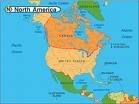
    North America:
    Less than a third of my breakout class was from US and Canada. I did some role play exercises with people from Montreal, Quebec and Phoenix, Arizona. Compared management styles with a older lady from Houston, Texas. And tripped out at lunch with a crew that included folk from Boston, Massachusetts, Los Angeles, California, Chicago, Illinois, and Charlotte, North Carolina. Others who were not in my breakout included two Black guys from New York City and I was on the same flight home with a colleague from our Atlanta, Georgia office.

    South America:
    In addition to two Argentinians, there was also a young lady in our breakout who was from Sao Paulo, Brazil. She was very quiet and I didn't get an opportunity to speak with her.

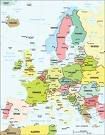
    Europe:
    There were more Europeans in the class than from any other continent, and I was surprised by the number of managers from the Nordic region: Copenhagen, Denmark, Stockholm, Sweden, Amsterdam, (North Holland) Netherlands, Oslo, Norway, and Helsinki, Finland.

    Another role play partner was from Brussels, Belgium, which he referred to as the Capital of Europe! There was a guy (with the coolest accent) from Rome, Italy, a guy with that smooth French accent from Paris, France and two guys from Germany: Munich, and Frankfurt.

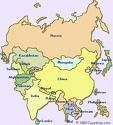
    Asia:
    The other two guys from Asia (Tokyo, Japan and Shanghai, China) were very quiet and didn't speak much during the class. There was also one Black guy who kept contributing stories about how he does things in Japan, but he was obviously not Japanese... his country of origin was (and is) still up for debate!

    As you can see, the learning environment of the past week was as interesting as the learning material. I learned a lot about people (in general) and as barriers fell throughout the week, I began to see everyone as just people. To varying degrees, we all spoke the same language and encountered the same issues in managing and developing people in our jobs. This week was an education within an education, and I feel that I am all the better for it. Thanks for joining plezWorld's Global Village.