Showing posts with label african american. Show all posts

Wednesday, February 04, 2009

African American Dance Review - Atlanta


The African American Dance Review will perform at the Rialto Center for the Arts in Atlanta, Georgia on Thursday, Friday, and Sunday of this week (Feb 5, Feb 6, and Feb 8).

From the African American Dance Review website:

The history of African American dance is expansive and dates as far back as the 1600s with the arrival of African slaves to America. Distinct variations of dance in these communities were a result of traditions from different African ethnic groups, the culture of slave owners and other groups within the immediate society, as responses to the musical and social lives of individuals in that community, and in response to different experiences under slavery.

Even today’s African American Dance movements have inherited the culturally rich, innovative and distinct blends of rhythmic techniques of its predecessors.

Dance, as with the folktales of that time, had become the primary means of preserving history, morals, and other cultural information. The result oftentimes is a generational story effectively expressed through movement.

The African American Dance Review (AADR) production (The Progressive Realization of Dreams) has been established to illustrate this story from beginning to end and everything in between. The production is designed to be a thought-provoking, conscious shifting, entertaining and educational event. The audience will take a visual journey of the origin of dance from its African roots through the high-energy genre that it currently represents! It is dually purposed to incite further awareness to the arts of dance and spoken word, initially in the Atlanta area school system and eventually in other regions of the nation that would benefit from its existence.


~ ~ ~


plez sez: the SugarPlum and i had occasion to get a "sneak preview" of this show a few nights ago. there is only word to describe it: AWESOME!

the passion and artistry of the young dancers is unparalleled... and the musical and movement journey from the shores of Africa, through the Diaspora, on the plantation, in the dancehalls, to the street corner, in the Black Church, on "Soul Train," to breakdancing, and rhythms that provide the soundtrack for today... the "African American Dance Review" is a soulful and moving experience.

do yourself a favor, head into downtown Atlanta later this week and check out this show... you'll be glad you did!

tickets are an affordable $40 and the proceeds go to a number of great causes. tickets are also available on-line through Rialto Center for the Arts Box Office.

~ ~ Citations ~ ~

Read the CW 69 event calendar about African American Dance Review.

Read the Creative Loafing article about African American Dance Review.

~ ~ ~ ~ ~ ~


Monday, December 15, 2008

Hog And Hominy - Opie - Book Review

A few weeks ago, I received a review copy of "Hog and Hominy: Soul Food from Africa to America" by Frederick Douglass Opie. The book is a comprehensive history of the origins of soul food beginning to pre-colonial Africa and spanning the African Diaspora to America and the Caribbean. In exchange for receipt of the review copy of the book, I have agreed to write a review on plezWorld.

Dr. Opie is associate professor of history and director of the African Diaspora Studies Program at Marist College in Poughkeepsie, New York.

plezWorld Review

In a word, the book is delicious. Even though, it reads like it was written by a college professor (which it was) who is defending his thesis, "Hog and Hominy" was an easy read and I found it difficult to put down. Being of African descent myself, I marvelled at how Opie easily wove a rich and informative tapestry that blended the foods the indigenous Africans consumed with the changes in diet upon their interaction with Europeans. This is a history book about cooking with a few recipes in it.

The creolization of Africans' diets went through a number of transformations: while on the African continent, when introduced to Native American, and after close exposure to the Europeans who enslaved them in America and in the Caribbean. One of the items in the book was how the slaves adapted their diet to the food that they found in America: replacing yams with sweet potatoes, the use of corn and corn meal, the introduction of pork products into their diet, and the continued ritualization of chicken with ties directly back to Africa.

Since I grew up in upstate New York from parents who were raised in the North Carolina, I often wondered how certain foods found their way onto our dinner table; foods that my white classmates had never experienced. "Hog and Hominy" also goes into great detail about the Great Migration of Blacks from the South to the North in the early 1900's and the second wave (that also included Blacks from the Caribbean) in the 1950's.

Midway through the book, I realized that the author's grandparents migrated and raised their family in my home town of North Tarrytown, New York. I happen to have known several of the author's kin while growing up since most of the Black folk in North Tarrytown lived in one area. Opie and I were even born in the same hospital!

Lastly, "Hog and Hominy" touches on the Black Power Movement and the campaign by a number of Black leaders to move away from soul food. It was a sobering look at how the effects of the Diaspora and slavery still affect many Blacks today through their diet.

plezWorld encourages you to visit Columbia University Press where you can purchase copies of the book.
~ End of Review ~


Description of "Hog and Hominy: Soul Food from Africa to America" from Columbia University Press:
Frederick Opie's culinary history is an insightful portrait of the social and religious relationship between people of African descent and their cuisine. Beginning with the Atlantic slave trade and concluding with the Black Power movement of the 1960s and 1970s, Opie composes a global history of African American foodways and the concept of soul itself, revealing soul food to be an amalgamation of West and Central African social and cultural influences as well as the adaptations blacks made to the conditions of slavery and freedom in the Americas.

Soul is the style of rural folk culture, embodying the essence of suffering, endurance, and survival. Soul food comprises dishes made from simple, inexpensive ingredients that remind black folk of their rural roots. Sampling from travel accounts, periodicals, government reports on food and diet, and interviews with more than thirty people born before 1945, Opie reconstructs an interrelated history of Moorish influence on the Iberian Peninsula, the African slave trade, slavery in the Americas, the emergence of Jim Crow, the Great migration, the Great Depression, and the Civil Rights and Black Power movements. His grassroots approach reveals the global origins of soul food, the forces that shaped its development, and the distinctive cultural collaborations that occurred among Africans, Asians, Europeans, and Americans throughout history.

Hog and Hominy traces the class- and race-inflected attitudes toward black folk's food in the African diaspora as it evolved in Brazil, the Caribbean, the American South, and such northern cities as Chicago and New York, mapping the complex cultural identity of African Americans as it developed through eating habits over hundreds of years.


~ ~ ~


View or listen to Opie's discussion of "Hog and Hominy" at the Atlanta Forum Network

~ ~ Other Book Reviews ~ ~

Read the Columbia University Press review here.

Read the Foodreference.com review here.

Read the eats.com review here.

~ ~ ~ ~ ~ ~


Saturday, July 26, 2008

CNN's Black in America - Black Man


From CNN.com:
(CNN Student News) -- Forty years after the assassination of Dr. Martin Luther King Jr., CNN launches a sweeping on-air and digital initiative, CNN Presents: Black in America. These documentaries, "The Black Woman and Family" and "The Black Man," focus on fresh analysis from new voices about the real lives behind the stereotypes, statistics and identity politics that frequently frame the national dialogue about Black America.

Black in America: The Black Man
Aired: Thursday, July 24, 9 p.m. ET.
Program overview: Soledad O'Brien evaluates the state of black men in America and explores the controversial topics of black men and fatherhood; disparities between blacks and whites in educational, career and financial achievement; and factors leading to the dramatic rates of black male incarceration. The documentary also examines the achievements of black men and the importance of the positive influences of black fathers.
Resources associated with CNN Presents: Black in America.


plez sez: i'm still not feeling the spoken word poet who introduces each segment... been skipping it!

okay, i have to admit, "Black Man" was considerably better than "Black Woman & Family," but both leave a lot to be desired. In "Black Man," soledad did a much better job in providing the context and setting the table for the racial strife that gripped little rock, arkansas in the wake of the de-segregation order and the death of martin luther king, jr. but if you weren't listening closely, it almost appeared that the two gentlemen who were profiled were part of the Little Rock Nine!

but the message associated with the assistant superintendent's family was not lost on me: the two "successful" sons (the lawyer and musically-inclined college student) found their happiness with white women (not saying there's anything wrong with it, but...), while the ne'er-do-well son had a child out of wedlock and was sitting in jail on a weapons charge. and the son who is a DA couldn't even find any Black friends with which to socialize with outside of work (look at the gathering at his house).

and of course, ms. o'brien didn't have to look far to find a deadbeat dad who was too sorry to show up on time for his daughter's birthday party. alittle later in the show, the reason for his being tardy is evident... his baby momma is carrying the twins of some other dude! so if she is soooo damn upset with having to raise Deadbeat Dad #1's daughter, how the HELL is she gonna feel raising Deadbeat Dad #1's daughter and Deadbeat Dad #2's twins!!! what the HECK was she thinking?!? i guess she was like ole girl from "Black Woman & Family" who had FOUR kids by some guy (and adopted another one) who had no intention of marrying her.

i guess my main complaint is the same that i lodged after the first episode: this was not groundbreaking stuff! the statistics have been published and rehashed (it was kind of discouraging to hear about an educated Black man being no more desirable an employee than a white felon!). but nothing new and shocking. nothing tying the current situation to slavery (at least, a modest attempt was done on night one). there are no gay people in the Black community? are rap and hip hop artists the only expression of Black culture (what about Blues & Jazz, and pop, and rock, and R&B - all music forms that were invented by Black people, yeah, even pop!). there are Black men in real colleges, we all didn't get our degrees while incarcerated (there are more Black college-aged men in college than in jail).

she made a veiled reference to the light skin vs. dark skin "thing" that afflicts the Black community, while profiling high-yellow fast-talking Princeton educated Georgetown professor Rev. Dr. Michael Dyson (CNN profile here) and his younger darker skinned brother who is serving a life sentence for murder. unfortunately, this phenomenon and scourge of the Black community was not fleshed out... and if you are not Black, you probably had NO IDEA what they were talking about! that could've been a two-hour show all on it's own... actually, every topic that was glossed over could've been its own two-hour show.

i know time was short (only two hours), but was it that short that the only successful Black family that she could profile was living in a white neighborhood, getting pulled over by the cops outside their house, yet braggadocios about the bermuda grass upkeep in that same neighborhood (notice, he was never on tape around any of his neighbors), and sending his kid to a white private school? she could've rolled through DeKalb County, Georgia and found successful Black families living in Black communities, sending their kids to predominantly Black schools, and bragging about the bermuda grass on their lawns! both nights played up a number of stereotypes, and then took the extra step of validating them.

i applaud soledad o'brien's efforts (even though, over the two nights, she said absolutely NOTHING about being Black - or mixed race - herself during the documentary), but her efforts completely missed the mark. before embarking on such an endeavor again, i suggest she talk with me, first!


Thursday, July 24, 2008

CNN's Black in America - Woman & Family


From CNN.com:
(CNN Student News) -- Forty years after the assassination of Dr. Martin Luther King Jr., CNN launches a sweeping on-air and digital initiative, CNN Presents: Black in America. These documentaries, "The Black Woman and Family" and "The Black Man," focus on fresh analysis from new voices about the real lives behind the stereotypes, statistics and identity politics that frequently frame the national dialogue about Black America.

Black in America: The Black Woman & Family
Aired: Wednesday, July 23, 9 p.m. ET
Program overview: Soledad O'Brien explores the varied experiences of black women and families and investigates the reasons behind the disturbing statistics on single parenthood, disparities between black and white students in schools, and the devastating toll of HIV/AIDS. O'Brien reports on the progress of black women in the workplace and the status of the black middle class.

Resources associated with CNN Presents: Black in America.


plez sez: i waited with bated breath for this show to air. got the DVR all queued up and ready to go. skipped over the hip hop/spoken word artist... that isn't my style, sorry.

alas, less than an hour into the two hour program, i am disappointed with the show. the Black experience, the segment on Black women alone could've run for two hours. maybe i'm socially aware, maybe because i'm Black, but i didn't see any groundbreaking information. the same tired issues were trotted out: single mother households, lack of emphasis on education, poverty in the Black community, rampant HIV/AIDS infection rates, lack of preventive health care, interracial marriage, ad nauseum.

and of course, hallelujah, low and behold, a WHITE ancestor! how in the heck did ole girl think she get that light skin and freckles! oh, not just any old white ancestor, of course, they found a family whose white great-great-great grandfather had a Black mistress, not a slave! he had two families: one white and one Black. each family had a gaggle of kids. earth to soledad o'brien, just about every damn Black family in the US has the DNA of some nasty, white rapist lurking in the shadows of its history. and just think, marriage between white men and Black women was against the law in most southern states until 1970! yeah... less than 40 years ago!

during this time of obvious miscegenation on the part of white men raping Black women, a Black man could be lynched for looking (or whistling) at a white woman... some shit about violating the purity of the white race! see Emmit Till, a 14-year old boy who was dragged from his uncle's home and shot and lynched for allegedly whistling at a white woman while visiting relatives in mississippi in 1955.

i guess my biggest issue with the "Woman & Family" episode was the lack of historical context (other than the white ancestor bit) surround all of the issues that were discussed in the documentary. are Black people that damn pitiful, that damn lazy and shiftless, and deserving of scorn for the failures in their communities, OR were there some contributing events in their history that saw them to this station in life? soledad o'brien didn't go there, even though she is Black, her parents were college professors, and her and her five siblings are all graduates of harvard. she couldn't take that extra step and delve into the why?

why do most of us have white ancestors, but rarely do we know who they are? why do most of the Black families not have two parents? why is there such a shortage of eligible Black men for professional Black women? why is education a failure for Black families at such an alarming rate? why do so few of our young men graduate from high school (less than 50 percent)? why is HIV/AIDS such a scourge in our community? why doesn't anyone step up to address the health care gap between Blacks in america and whites in america? why does a high percentage of Black children suffer from homelessness and poverty in america? why does it seem that slavery, something that ended over 150 years ago, still hold so many Black people back? why do so many Black people vote for the Democratic Party candidates? why did circumstances in New Orleans lead to such destruction of that city when similar catastrophes in other parts of the US don't have such a negative effect?

this was not a balanced story... they should have stayed with the Rand family and critiqued them in various scenarios rather than jump around. there was little continuity between segments (except when they referenced members of the Rand family). there was no acknowledgement of nuance, no shades of gray, few nuggets of information that would have made this a groundbreaking documentary. one would be better off finding a copy of "Eyes on the Prize," which covers 30 years of the Civil Rights Movement in a FOURTEEN HOUR documentary.

well... now, i'm off to watch Black men episode...


Tuesday, July 22, 2008

CNN Presents: Black in America - July 2008


CNN Presents: Black in America


Back in April 2008, CNN started the Black in America presentations with an in depth review of the assassination of Martin Luther King, Jr. Over the course of two nights in July 2008, Soledad O'Brien hosts an in depth and groundbreaking documentary on what it means to be Black in America.

From CNN.com:
(CNN Student News) -- Forty years after the assassination of Dr. Martin Luther King Jr., CNN launches a sweeping on-air and digital initiative, CNN Presents: Black in America. These documentaries, "The Black Woman and Family" and "The Black Man," focus on fresh analysis from new voices about the real lives behind the stereotypes, statistics and identity politics that frequently frame the national dialogue about Black America.

Black in America: The Black Woman & Family
Wednesday, July 23, 9 p.m. ET
Program overview: Soledad O'Brien explores the varied experiences of black women and families and investigates the reasons behind the disturbing statistics on single parenthood, disparities between black and white students in schools, and the devastating toll of HIV/AIDS. O'Brien reports on the progress of black women in the workplace and the status of the black middle class.

Black in America: The Black Man
Thursday, July 24, 9 p.m. ET.
Program overview: Soledad O'Brien evaluates the state of black men in America and explores the controversial topics of black men and fatherhood; disparities between blacks and whites in educational, career and financial achievement; and factors leading to the dramatic rates of black male incarceration. The documentary also examines the achievements of black men and the importance of the positive influences of black fathers.

Before and after viewing these programs, use the overview questions and discussion activity that follow to facilitate a discussion with your pre-teen and teenaged children.

Before viewing:
  • What is your impression of black culture in American society?
  • What accomplishments have blacks made in America since Martin Luther King Jr.'s assassination?
  • What challenges do you think exist for black men and women in American society today?
  • Has Barack Obama's candidacy impacted your view of black men and women in America? Explain.
  • Do you think that your family's history has affected your life? If so, how?

    After viewing:
  • What factors for success did you observe in the documentary? Are these factors present in your life?
  • Did any of the individuals in the program grow up in an environment similar to yours? Explain.
  • In your opinion, are there any aspects of black society that could have been added to the program? If so, what are they?
  • Did anything in the documentary surprise you? If so, what?
  • Has anything in this program affected your view of blacks in America? Explain.


    plez sez: CNN usually does a very good job with these types of documentaries, with a good job, i mean a balanced story which captures the nuances of the subject matter. i am anxious to see their treatment of this subject, because there are so many nuances to Black folk, i am more than a bit curious as to how they will capture them all in two two-hour presentations.

    as groundbreaking and noteworthy that this project appears, plezWorld hopes that the people who would benefit the most from viewing it (non-Black folk) will actually take the time to watch it. any public school education will leave you with the knowledge of what it is like to be non-Black in America, but there are scarce opportunities to have the light shown on the Black experience, except during the brief lessons on slavery and the Civil Rights Movement. and throw in the criminal element that stars on the nightly news all over the country, it would be too easy to have a distorted view of what it is like to be a Black person in America.

    NOTE: The reason why I blog is to give readers an opportunity to hear and respond to various points of view. Unfortunately, some points of view are so abhorrent and vile that I refuse to let plezWorld be a forum for them. No more comments will be allowed on this subject, due to the cowardly and racist diatribes of a few.


  • Saturday, December 08, 2007

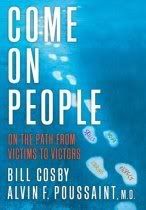
    Come On People - Cosby & Poussaint - Review 4

    I have taken on the task of writing a review for the book. In this and subsequent posts, I will review one chapter in the book. The fourth chapter is titled: Teach Your Children Well

    Review
    The good part about this book is that it lays down suggestions and fixes for the ills of our society in an easy-to-read and straightforward manner. The reviewer has an issue as to HOW this plan can be enacted in a disinterested populous; the very people who should be reading this and working to affect change in the Black community would no more read this book than attend a KKK rally! The poor people who are the beneficiaries of our broken public school system have few means to correct its woes: underfunding, poorly trained teachers, poor facilities, etc.

    The authors spend a fair amount of time decrying the use of Black English (or Ebonics). I agree that the predominant use of Ebonics is not a good thing and Standard English should be encouraged and spoken around Black children. But a linguist like John H. McWhorter, Ph. D. will tell you that Ebonics was not born of ignorance, but is just a variation of Standard English that was created by victims of the Black Diaspora who were brought to this country against their will. Standard English is the language that is used by and large globally and Ebonics is a pidgin-creole language.

    The section that resonated the most with me was titled "Respect Our Elders." The wisdom of our people resides in the minds of our elders, they endured the barbs and disgrace of segregation and hostility of racism, they can surely provide the wisdom as to how we can overcome the overwhelming odds that threaten our youngsters. We, as a people, have become a rudderless race, a group charting a course for disaster without a moral compass or the values that kept us doing right when others were doing us wrong. If we learn to respect our elders we will stop tearing up and destroying what they worked so hard to build (for us).

    ~ End of Review ~

    Here is a link to a downloadable PDF of excerpts from this chapter:
    Teach Your Children Well (pages 124 - 132)

    plezWorld encourages you to visit www.BillCosby.com where you can purchase copies of the book and you will find a forum called "The Cos," that is designed for community members to discuss issues beyond those addressed in the book, as well as a place for people to come together and offer solutions.

    Monday, December 03, 2007

    Come On People - Cosby & Poussaint - Review 3

    I have taken on the task of writing a review for the book. In this and subsequent posts, I will review one chapter in the book. The third chapter is titled: We All Start Out as Children

    Review
    Chapter Three is a primer on child rearing in the Black community. Amid the crime, drugs, alcohol, murder, teen pregnancies, and high drop-out rates in public schools, there are some things that could be done while our children are babies to reverse these disturbing trends. I once read that everything that I needed to know I learned in kindergarten (maybe that was on a bumper sticker?)... this chapter highlights this fact and holds the Black community's feet to the fire that they've dropped the ball on raising our children the right way.

    The chapter is broken into manageable sections that read like a menu for successful child rearing: How to Prepare for Birth, How to Care for the Expectant Mother, How to Care for an Infant, How to Discipline a Child, How to Create a Village for Our Children, and How to Care for Our Teenagers.

    The Raising Victors section closed out the chapter with a final salvo on why we need to raise our children the right way:
    "Besides helping children develop a positive identity, you must teach them to assert themselves constructively when the odds seem stacked against them. If you express confidence in them, these kids will have confidence in themselves and overcome the obstacles life throws their way."
    ~ End of Review ~

    Here is a link to a downloadable PDF of excerpts from this chapter:
    We All Start Out As Children (pages 77 - 88)

    plezWorld encourages you to visit www.BillCosby.com where you can purchase copies of the book and you will find a forum called "The Cos," that is designed for community members to discuss issues beyond those addressed in the book, as well as a place for people to come together and offer solutions.

    Thursday, November 29, 2007

    Come On People - Cosby & Poussaint - Review 2

    I have taken on the task of writing a review for the book. In this and subsequent posts, I will review one chapter in the book. The second chapter is titled: It Takes a Community

    Review
    The second chapter should've been the first chapter, because the breakdown in the Black community preceded the lost generations of our Black men. If we could implement some of the solutions presented in the book (finally break the mental shackles of slavery; learn and acknowledge the triumphs of those who came before us - like Washington, Tubman, DuBois, Parks, Marshall, and King; reject victimhood because we are no longer victims; and defend our villages (neighborhoods) against those who work to destroy them).

    I would like to repeat a short excerpt about defining your village:
    "I went to Koreatown today and I met with the Korean merchants. I love them. You know why? They got a place called what? Koreatown. [And] when I left them I went to Chinatown. They got a place called what? Chinatown.
    "Where is your town?"


    And here is another excerpt about defending your village:
    "If the Ku Klux Klan were coming again, what would we do? We'd grab our children, throw them under the table, put them under the bed, put bodies on them, get the guns, and be ready.
    "But how do we respond to a crack cocaine dealer? How do we respond to a dysfunctional school system? How do we respond to the criminals in our midst? How do we respond to those people who are unraveling the moral fiber of our village?"


    We need to define and defend our neighborhoods, and make them in the image of what we want them to be. When we stop believing that we deserve to be treated as second class citizens, then we will take that long leap to respectability of ourselves and gaining the respect of others.
    ~ End of Review ~

    plezWorld encourages you to visit www.BillCosby.com where you can purchase copies of the book and you will find a forum called "The Cos," that is designed for community members to discuss issues beyond those addressed in the book, as well as a place for people to come together and offer solutions.

    Tuesday, November 27, 2007

    Come On People - Cosby & Poussaint - Review 1

    I have taken on the task of writing a review for this book over the next couple of weeks. In this and subsequent posts, I will review one chapter in the book. The first chapter is titled: What's Going On with Black Men?
    Review
    A good read, but after 29 pages, not one new thought or new idea or new solution. Maybe I've heard it all before, maybe I've heard it all before from Dr. Cosby, but the state of Black men in this country is in atrocious shape: highest rate of death due to homicide, highest rate of murder, lowest life expectancy, high suicide rate, highest high school drop-out rate, highest unemployment rate, highest rate of incarceration, and the highest rate of homelessness. As the authors note in the book, "This is madness!"

    Even though, I have heard them all before, Cosby & Poussaint do present some cogent solutions to the plight of the Black man in America: tone down the bravado and machismo that pervades our community because it breeds the self-destructive activities that get so many of our men and boys in trouble, stop defining your manhood on getting a woman pregnant, define your manhood by being a father to your children, stop leaving the child rearing of our sons to their mothers, the only person who can raise a boy into manhood is a man, and take advantage of second chances to make something of your life.

    Unfortunately, the solutions present a difficult quandary because they suggest a paradigm shift to the prevailing culture of the Black community. What event or person is going to be the catalyst for this change? What is going to be the wakeup call that shakes our community from its 40-year malaise to make our Black men more accountable to their community? I'm afraid the answers to these questions are not presented in the first chapter.
    ~ End of Review ~

    plezWorld encourages you to visit www.BillCosby.com where you can purchase copies of the book and you will find a forum called "The Cos," that is designed for community members to discuss issues beyond those addressed in the book, as well as a place for people to come together and offer solutions.

    Wednesday, November 21, 2007

    Come On People - Cosby & Poussaint - Overview

    A few weeks ago, plezWorld was contacted by the promoters of the new book by Dr. Bill Cosby and Dr. Alvin Poussaint, "Come On People," which combines messages of personal responsibility with practical solutions, and retells the stories that have been included at community call-outs in cities across the country for the past three years. In exchange for a review copy of the book, plezWorld has agreed to write an honest review of the book.

    I am not a professional book reviewer and my command of the English language is up for debate in some quarters, but I agree with the tag line for the book: "No matter your economic status, no matter your age, no matter your race, no matter your gender, and no matter your religion, we are all allies in changing our future for the better." I have taken on the task of writing a review for the book. My wife has also read the book, so there is an opportunity for a Guest Blog with her perspective on the book. In posts over the next two weeks, plezWorld will review a different chapter in the book:
    1. What's Going On with Black Men?
    2. It Takes a Community
    3. We All Start Out as Children
    4. Teach Your Children Well
    5. The Media You Deserve
    6. Healthy Hears and Minds
    7. The High Price of Violence
    8. From Poverty to Prosperity
    Overview: This appears to be a self-help book on how America (specifically, Black America) must take a long hard look on what we've learned from our past and how to translate that legacy into solutions of success for our collective futures. These solutions translate well for ALL of America, but the book concentrates its focus on the Black community which needs this help the most.

    If you'd like a preview, here are links to three downloadable PDF's of excerpts from "Come On People":
    We All Start Out As Children (pages 77 - 88)
    Teach Your Children Well (pages 124 - 132)
    Healthy Hearts and Minds (page 168 - 174)

    At www.BillCosby.com you can purchase copies of the book and you will find a forum called "The Cos," that is designed for community members to discuss issues beyond those addressed in the book, as well as a place for people to come together and offer solutions.

    Monday, November 19, 2007

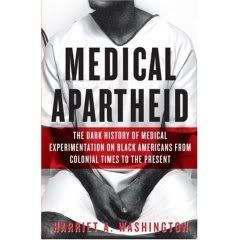
    Medical Apartheid: The Dark History of Medical Experimentation on Black Americans

    Medical Apartheid: The Dark History of Medical Experimentation on Black Americans from Colonial Times to the Present was broadcast on Democracy Now!. If you have not had the opportunity to listen/view this program, choose one of the links below.

    Program Description:
    Medical scholar Harriet Washington talks about her new book, “Medical Apartheid: The Dark History of Medical Experimentation on Black Americans from Colonial Times to the Present.” The book reveals the hidden underbelly of scientific research and the roots of the African American health deficit. It also examines less well-known abuses and looks at unethical practices and mistreatment of blacks that are still taking place in the medical establishment today.

    A report by the American Cancer society shows that African Americans are still more likely than any other group to develop and die of cancer. The study states that socio-economic factors play the largest role in this disparity - African Americans have less access to health care and information, and are less likely to get screening and medical treatment. Well, a new book offers one answer into why black Americans deeply mistrust American medicine.

    Harriet Washington. Medical writer and editor. She is a visiting Scholar at DePaul University School of Law. Previously she was a Fellow in Medical Ethics at Harvard Medical School and at Stanford University. She is the author of the new book, “Medical Apartheid.” -- January 19th, 2007.


    Watch 256k RealPlayer Video of the "Medical Apartheid" Interview

    Listen to "Medical Apartheid" on Democracy Now!:

    Interview begins at 17:00 on the divShare Audio Player


    plez sez: this interview about medical apartheid in america ran chills up my spine!

    i was aware of the Tuskegee Experiment, but was not aware of the amount of medical experimentation that had been wrought on Black people since we landed in this country as slaves. and the chilling experimentation that continues to this day in Africa and Brazil on behalf of large pharmaceutical companies.

    after listening to this, one can see why illness and disease (cancer, hypertension, diabetes, hiv/aids, mental illness, etc.) always seems to be worse in the Black community. and i have no doubt that this long history (over 300 years) of being used as guinea pigs by the medical establishment is one reason why Black people are so leery of preventive medicine.

    [Hat Tip: That Black Lesbian Jew]

    Wednesday, May 09, 2007

    Expectations For Our Kids

    This must be my week to receive impassioned e-mail messages. The following message was received earlier today from an old friend of mine. I haven't talked to him in over a year, so I was a bit surprised when I saw his e-mail address. I get loads of junk mail on a daily basis, but I try to read them before sending them to my SPAM folder... thank God I read this one!

    My friend has a daughter who had been in a private Christian school until it shut down after last year. She is finishing her first year in a public middle school here in the Metro Atlanta area and he had occasion to attend the awards program at the public school. The school has a sizable Black student population, but you wouldn't be able to tell from the awards program. His e-mail message is his candid reaction of what he saw. I have not changed the content of his message:

    Subject: Expectations For Our Kids

    This is something I want to share with everyone ESPECIALLY those of you who have kids. I went to my daughter’s Middle School Awards program this evening. I was very happy for my daughter, but I became soooooo ANGRY when I looked at the ratio of kids that were being honored.

    There were around 250 kids. I counted 20 African American kids and only 3 of them were boys. Only one of the boys received all A honor roll. So, that means that less than 2 percent of the kids that made at least all A’s or A’s & B’s for Seventh grade were African American boys.

    I became even angrier when I saw almost all of the other minorities (Middle Eastern, Chinese, and other Asians, etc) receive multiple awards.

    WHY IS THIS !!!!!!!!!!!!!!!!!!!!!!

    It comes down to Expectations!!!! Other minorities don’t expect less than A’s from their kids. Most whites expect an A or maybe B sometimes. If you talk to most African American parents, they will say, "Just as long as my child passes to the next grade, I’m satisfied". They could care less what grades the[ir kids] make. It has come to a point where it’s not cool to be smart in school or referred to as “Acting White”. So... what does being African American suppose to mean... acting dumb?

    I know that 90% of the time all of our kids CAN DO the work and make A’s and B’s, but we don’t push them or set expectations for them to make these grades. I know that I wasn’t pushed to make only A’s and B’s as a child. Every child will not make A’s and B’s, but we should push them to do their best.

    This will follow our children as they go to High School and College. We [should make it] embarrassing for them to have low grades when they have to apply for a scholarship, an internship or even a job.

    One major thing we have to do is to reward our kids when they do well in school. It would be a special treat for them to get extra things for putting a little extra effort to do well in school. It’s so easy to be hard on our kids when they get in trouble. We need to make sure we show a lot of appreciation when they do well.

    It’s going to be VERY competitive for our kids now and even harder for them in the future. Most of them are not strong in Math and Science and they are reading far below their grade level!!!!

    Take that extra time to make sure your kids have done their homework, get them a tutor if necessary. Make them read different books or a number of books each week and turn OFF THE TELEVISION. Let’s take them to a level where ALL of us can be proud!! I don’t want to go to another Awards programs and be disappointed!!!!

    Please pass it on !!!

    plez sez: i promised my friend that i would pass this along and share it with others. like him, i am passionate about my daughter's education: she is 5 years old and is finishing her 3rd year at a private school. my wife and i understand the value of a quality education, but more important, we understand that we cannot squander the opportunity to make it easier for our daughter to have a better life than ours. it would be the height of irresponsibility to not equip my daughter for the rigors of life in the "REAL WORLD" because of a faulty education. we have the means to send my daughter to a nice private school, but even if we were subject to the dingiest inner city school or poorest rural school, my daughter would be reading books, learning math, and gaining an appreciation of the arts. we are our children's first (and only real) teacher!

    my wife and i often wonder: WHO is going to be available for my daughter to marry? how many Black men will she have to choose from? i'll be honest, i've already started looking! and when i replied to my friend, i told him that he'd be wise to keep tabs on those 3 boys who received awards at his daughter's school!

    the bell has been rung, it is time for us to answer it!