The blogosphere is wrought with posts decrying the state of Black America and the latest boil up has been over Jason Whitlock's reference to the Black KKK. plezWorld happened upon a New York Sun article written by John McWhorter which seems to encapsulate many of my thoughts on the matter.
To put things in the proper context, one should first read what Jason Whitlock wrote about the Black KKK and the death of Washington Redskins player Sean Taylor here.
Here are a few excerpts from the Whitlock article:
There's a reason I call them the Black KKK. The pain, the fear and the destruction are all the same. The Black KKK claimed another victim, a high-profile professional football player with a checkered past this time. I could very well be proven wrong for engaging in this sort of aggressive speculation. But it's no different than if you saw a fat man fall to the ground clutching his chest. You'd assume a heart attack, and you'd know, no matter the cause, the man needed to lose weight.
Well, when shots are fired and a black man hits the pavement, there's every statistical reason to believe another black man pulled the trigger. That's not some negative, unfair stereotype. It's a reality we've been living with, tolerating and rationalizing for far too long.
When the traditional, white KKK lynched, terrorized and intimidated black folks at a slower rate than its modern-day dark-skinned replacement, at least we had the good sense to be outraged and in no mood to contemplate rationalizations or be fooled by distractions.
No disrespect to Taylor, but he controlled the way he would be remembered by the way he lived. His immature, undisciplined behavior with his employer, his run-ins with law enforcement, which included allegedly threatening a man with a loaded gun, and the fact a vehicle he owned was once sprayed with bullets are all pertinent details when you've been murdered.
Rather than whine about white folks' insensitivity or reserve a special place of sorrow for rich athletes, we'd be better served mustering the kind of outrage and courage it took in the 1950s and 1960s to stop the white KKK from hanging black men from trees.
Our self-hatred has been set to music and reinforced by a pervasive culture that promotes a crab-in-barrel mentality.
You're damn straight I blame hip hop for playing a role in the genocide of American black men. When your leading causes of death and dysfunction are murder, ignorance and incarceration, there's no reason to give a free pass to a culture that celebrates murder, ignorance and incarceration.
The "keepin' it real" mantra of hip hop is in direct defiance to evolution. There's always someone ready to tell you you're selling out if you move away from the immature and dangerous activities you used to do, you're selling out if you speak proper English, embrace education, dress like a grown man, do anything mainstream.
The Black KKK is enforcing the same crippling standards as its parent organization. It wants to keep black men in their place — uneducated, outside the mainstream and six feet deep.
[T]he Black Klan and its mentality buried Sean Taylor, and any black man or boy reading this could be next.
This is a rarity, but I would like to share with you McWhorter's response to the Whitlock article, in its entirety:
[Jason Whitlock is] a black sports columnist at FOXSports.com, and he is disgusted with much of the black punditocracy's response to the murder of Redskins football player Sean Taylor. Some are claiming that he was a target because he was an athlete. Others insist that it is wrong and even racist to bring up that Taylor had spent a lot of time on the wrong side of the law.
But the tacit assumption would appear to be that the staggeringly high murder rate among young black men these days is just the way it is. Mr. Whitlock calls these murder[er]s the Black KKK.
Oh sure, if it's brought up people shake their heads. And certainly there are "Stop the Violence" forums and such.
But very few are as truly, lastingly aroused by issues such as these, which involve the black community looking inward, as they are by nooses hung from a tree, someone saying a bad word, or the latest study showing that racism still persists in one way or another in "institutional" guise. No one takes to the streets about the Black KKK, and academics find it much less interesting than, say, a study that some employers reject job applications with black-sounding names.
Friedrich von Hayek once noted, "It seems to be almost a law of human nature that it is easier for people to agree on a negative program — on the hatred of an enemy, on the envy of those better off — than on any positive task." That's Black America's problem right now.
Mr. Whitlock seeks "the outrage and courage it took in the 1950s and 1960s to stop the white KKK from hanging black men from trees." Instead, "we take great joy in prescribing medicine to cure the hate in other people's hearts. Meanwhile, our self-hatred, on full display for the world to see, remains untreated, undiagnosed and unrepentant."
The question Mr. Whitlock leaves, however, is precisely what we are to do about our internal cultural problems. Everybody knows how to protest. And sometimes a protest is necessary. But obviously, protest alone isn't working. How do you actually build something?
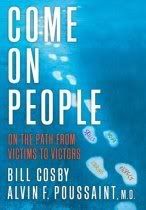
For one thing, get a copy of Bill Cosby and Alvin Poussaint's new book, "Come On People" and read it cover to cover, because it is all about precisely what needs to be done and how to do it. If Mr. Whitlock has written the best race column of the year, Messrs. Cosby and Poussaint have written the best book.
All black people should read it. The audiobook should be played in barbershops. Maybe somebody needs to set it to some "phat" beats so people can dance to it.
Read of how Joyce Riley's 24th Street Non-Violent Marchers actually got the thugs out of her Kansas City neighborhood. Read about how to get a degree and a job even if you're not on your way to college — step by step. And to top it all off, "Come On People" is a great read.
No, Tavis Smiley's book "The Covenant with Black America" from last year was not the same thing. Reading it you'd barely know the Black KKK existed, and the theme is reform of the system, when the solutions that help people almost always involve working within it. Or, instead of waiting for that great day when all inner city kids are taught by awesome teachers in glimmering buildings, focus on something that can happen in the real world. Become active on your local school board, and simply insist that students are taught to read with phonics-based programs. It's how poor kids learn to read, period. So much starts from there.
Another one: If you're going to vote for a Democratic presidential candidate, vote for the one most interested in things that will help black people to help themselves.
Upon which, note that this person is not Hillary Clinton. The fact that it is even possible that the black electorate will elevate Mrs. Clinton over Barack Obama because of her mere familiarity, or residual affection for her "black president" husband, is frankly a little embarrassing.
Those who say they don't "know" Mr. Obama need to get to know him, now. And if Mr. Obama is "not black enough," I would think that his commitment to reconnecting ex-con dads with their kids, not to mention his days doing community work, would qualify him as, at least, brown.
Mr. Whitlock's point about self-hatred is also key. Currently, in large swathes of the black community, an able-bodied young man who doesn't hold down a 40-hour-a-week job is considered normal even when he has kids. We must get to the point that men like that are considered as socially unacceptable as they are in a Scarsdale[, NY] living room — as they were even in black slums until the 1970s.
I vary from day to day as to how likely I see it that one day black America will be as committed to helping itself as, say, Israel's first residents were to reviving Hebrew. There is no telling how far we could go if only most of us found reading instruction programs as interesting as nooses.
John McWhorter is a senior fellow at the Manhattan Institute.
Read the McWhorter opinion article here.
plez sez: mcwhorter really packs a punch... he is quite the wordsmith and has an excellent economy of words. i loved his article.
there were a few points that jumped out at me while re-reading his article for this post:
- you will find a glowing recommendation to read "Come On People" by Cosby & Poussaint.
plezWorld has been reviewing this book (here, here, and here,) for the past two weeks and echoes mcwhorter's suggestion. if only the people who need to read it (i.e. those Black Klansmen) would read it! and i would love it if i went into my barbershop one morning and they were playing the audiobook version of the book. - we are spending too much time and energy trying to cure the hate in other people's hearts.
michael roberts used the n-word, imus called the rutgers basketball team a group of nappy-headed-hos and then got his job back 8 months later, some slack jawed hicks hung a noose in someone's cubicle at work, blah!, blah!, blah!!! get over it, people! we have mountains of issues in the Black community (education crisis, family crisis, disease crisis, employment crisis, etc.) that should preclude us spending time chasing after a mole hill of white folk begging for acts of contrition.
where is the contrition from the Black people who are murdering other Black people in Philadelphia, Detroit, Newark, and Atlanta? where is the contrition from the gangsta rappers who perpetrate their filthy language, misogynistic lyrics, and self-hating ways in their music[sic]? where is the contrition from those Black teachers who continually miseducate and under educate our Black children? and where is the contrition from the Black communities who let the Black KKK wreak havoc on our communities while throwing mere pebbles at a whiff of injustice by others?
EXHIBIT 1: three Black guys invade a white guy's house planning to steal drugs and money. they beat the white guy's stepson to a bloody pulp. when they attempt to escape, all three are shot in the back by the white guy, killing two of them. the survivor is charged with the murder of his two partners in crime. now the NAACP is protesting the murder charge saying that it is racist... WTF?!? - stop sucking up to hillary clinton, because bill clinton was not a "black president!"
"earth to those mindless Black democratic voters who think that january 20, 2009 will usher in a new age of enlightenment as long as hillary clinton is taking the oath of office"... it ain't gonna happen! as a matter of fact, her poll-watching ass may decide that it's time to end the affirmative action tit that so many of you like to suckle up to for comfort. she may not be the awe-shucks saxophone playin' "black person" that so many of you still think her husband to be. she may decide that we ought to stay in Iraq a little bit longer, she may decide that an invasion of Iran is in order, she may decide to extend those no-bid contractors that don't need any minority representation, she may lose that "ole time religion" and that "fake ass southern accent" that she dons everytime she speaks (down) to you!
there's only one BLACK man who could possibly be heading to the white house, and his name ain't bill!





 Posts
Posts